Better travel photographs with the phone you already carry
A clear subject and a patient minute usually help more than another camera setting.
A phone can record a trip coherently if you give each photograph a reason to exist. Begin with what you want to remember, then choose a position and a frame that make it clear. You do not need to photograph every view or change lenses every few seconds to bring home a useful set.
Name the subject before raising the phone
Decide what has caught your eye: a building’s shape, the light on water, a street’s colour or a small detail. Try describing it in one sentence. If the sentence includes four unrelated things, take separate pictures or choose the strongest part. A clear decision gives the frame a centre before you touch the screen.
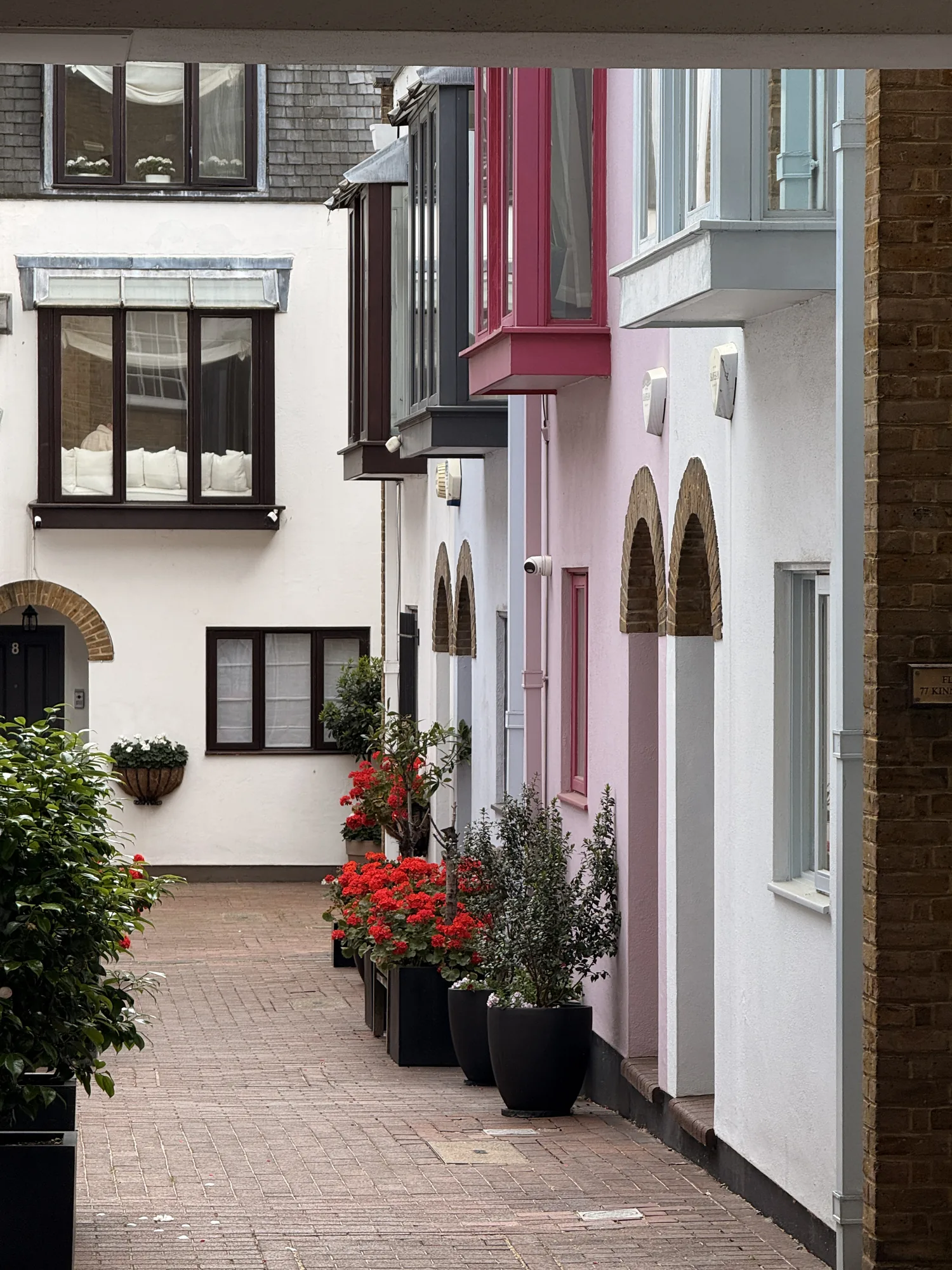
In the London mews photograph, the painted façades and flower pots provide that centre. It does not need an added person or a wider view of every adjacent house. Use the same approach elsewhere: find the small relationship that makes the scene distinct, then leave out anything that competes with it.
Check the edges and your standing place
Hold the phone steady and look around the frame before taking the picture. Half a sign, a bright bin or a branch across a face can draw attention away from the subject. Move a little if there is a safe, permitted place to do so. Repositioning often makes a cleaner image than planning to remove distractions later.
Keep vertical buildings from leaning unintentionally by checking how the phone is tilted. Sometimes an upward view is the point, especially with a tall tower; use it deliberately. Avoid stepping backwards while watching the screen, and do not stand in a cycle lane or doorway. The frame is a decision made from a sensible position, not a reason to claim public space.
Build a small sequence
Make a wide photograph that explains the place, a medium view that carries its main subject and a detail that records something you noticed. These images have different jobs. The wide view answers where, while the detail may hold the texture or colour that made you stop.
Repeat this only when the scene changes. Ten almost identical wide views add less to a diary than one useful wide picture and a close look at a railing or leaf. Keep a few imperfect images if they capture something meaningful. Sharpness matters for a photograph you will enlarge, but a technically tidy image can still say very little about the day.
Review after the moment has passed
Check one frame while you are still at the scene to catch a serious problem, then put the phone away. Looking at every version immediately can make you miss what is happening around you. Leave the longer selection for a meal break or the evening, when you can compare pictures with a little distance.
Start by choosing the photograph that best communicates the subject, then make modest edits to brightness, colour or the crop if needed. Keep the original file. A consistent set does not require every image to have exactly the same colour treatment; daylight, shade and interiors differ. Let the photographs retain those differences while removing avoidable distractions.
A few useful answers
Do I need a new phone for better travel pictures?
Begin with framing, light and selection. Those decisions improve the usefulness of a photo set before new equipment enters the plan.
Should I use the widest lens for every scene?
Use a view that gives the subject enough space without making it tiny. Extreme wide views are useful when the setting itself is the subject.
← More from the journal