Photographing a travel day when the light turns grey
Shorten the route and look for the detail the soft light makes visible.
Grey weather changes the photograph you can make; it does not automatically remove the reason to carry a camera. A shorter route, a useful sheltered pause and a subject that suits soft light can give a wet day its own sequence. Begin by choosing what remains comfortable to reach.
Give the day a smaller boundary
Pick one neighbourhood, garden section or town centre instead of a long outdoor circuit. Identify somewhere you can pause and put equipment away without blocking an entrance. The pause needs to fit the route, not require a second journey across the destination whenever a shower arrives.
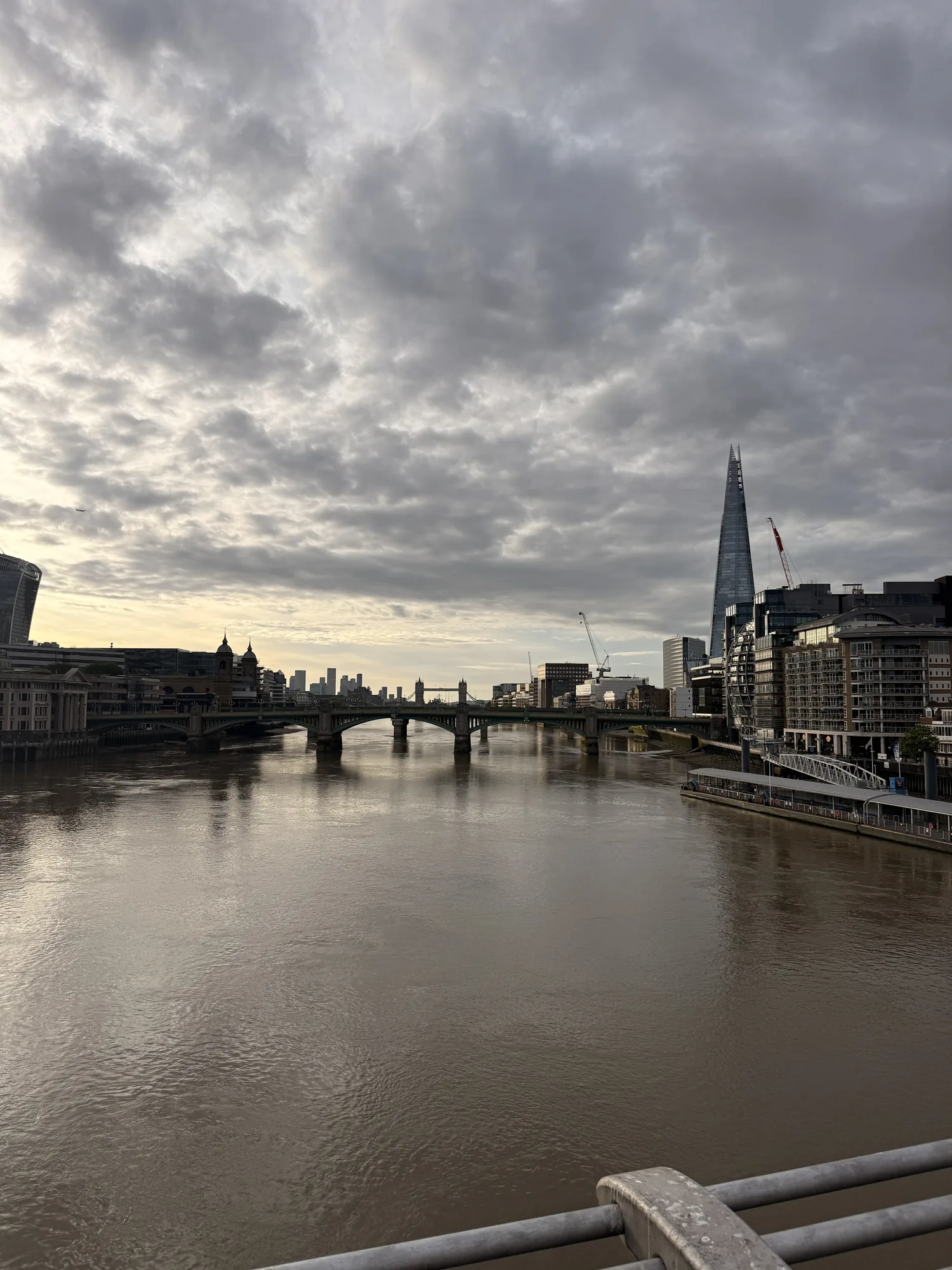
The London cover shows layered cloud over the Thames. It records a grey sky, not proof that rain was falling. Make the same distinction in your own captions. Describe visible light or wet pavement when the photograph supports it, while keeping remembered weather details separate if the image alone does not establish them.
Look for surfaces that suit the light
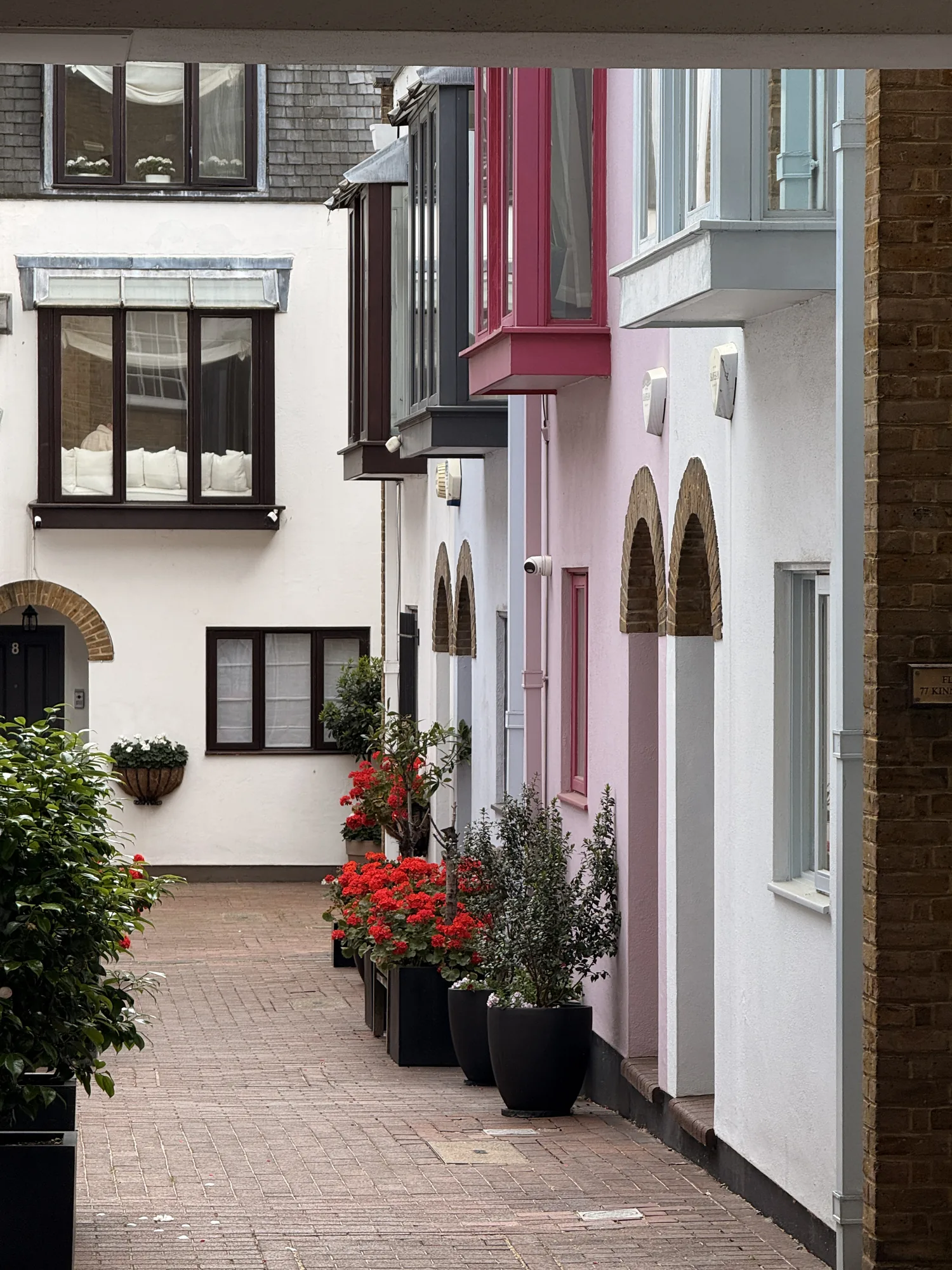
Soft light often makes colours and textures easier to observe without strong shadow cutting through the frame. A pale façade, a row of doors or a leaf can become the subject when the distant skyline has lost definition. Move closer from a permitted, stable place and give the detail enough space around it.
Reflections can add a second layer to a street picture, but check what is actually reflected. A puddle that mirrors a sign may work better than one reflecting only blank sky. Keep the frame simple enough that the reflected element can be understood. You do not need to crouch in a road or stand where passing vehicles may splash you to find that relationship.
Keep the equipment routine simple
Put the camera or phone away between photographs and use a cover or bag suited to the conditions. Follow the device manufacturer’s guidance rather than assuming a label about resistance means it can stay exposed indefinitely. Keep a clean cloth available for the lens and avoid rubbing grit across it.
Use fewer pieces of equipment. Repeated lens changes or a bag spread across a damp bench add work when the route is already less comfortable. Before opening the bag, choose the subject and prepare the frame in your mind. Then make a small set of pictures and close everything again. The method keeps more attention on the place and less on managing a collection of wet accessories.
Let the sequence keep its weather
When selecting the photographs, allow darker water, soft colours and cloud to remain part of the set. An edit that brightens every surface until it looks like a sunny day can remove what made the visit distinct. Adjust enough to show the subject clearly, then compare the result with the original.
Mix a broad scene with one or two closer details, so the sequence still has a setting. If the weather becomes unsuitable for the route, choose an indoor visit or stop photographing and return. The camera should not keep a day outside after the outing has become uncomfortable. A few thoughtful frames from a shorter walk are sufficient to describe the light you found.
A few useful answers
What should I photograph when the sky is flat?
Try closer textures, colour relationships and reflections, while keeping one wider image to explain the setting.
Should I brighten grey photos until they look sunny?
Use edits to make the subject readable while retaining the light that belonged to the scene.
← More from the journal