Skye in cloud: stone, paths and a white lighthouse
Three frames that keep the weather and the footing visible.
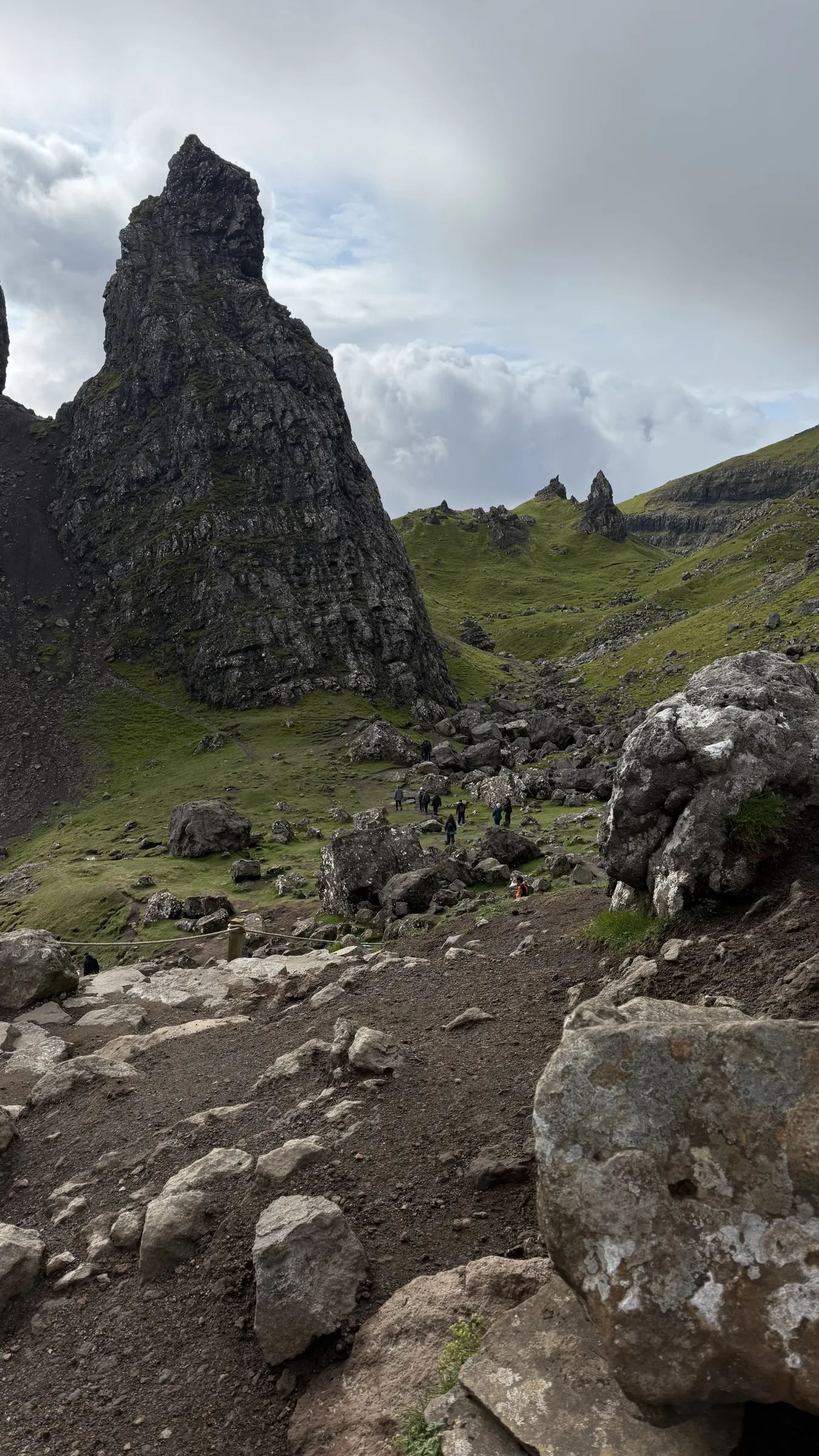
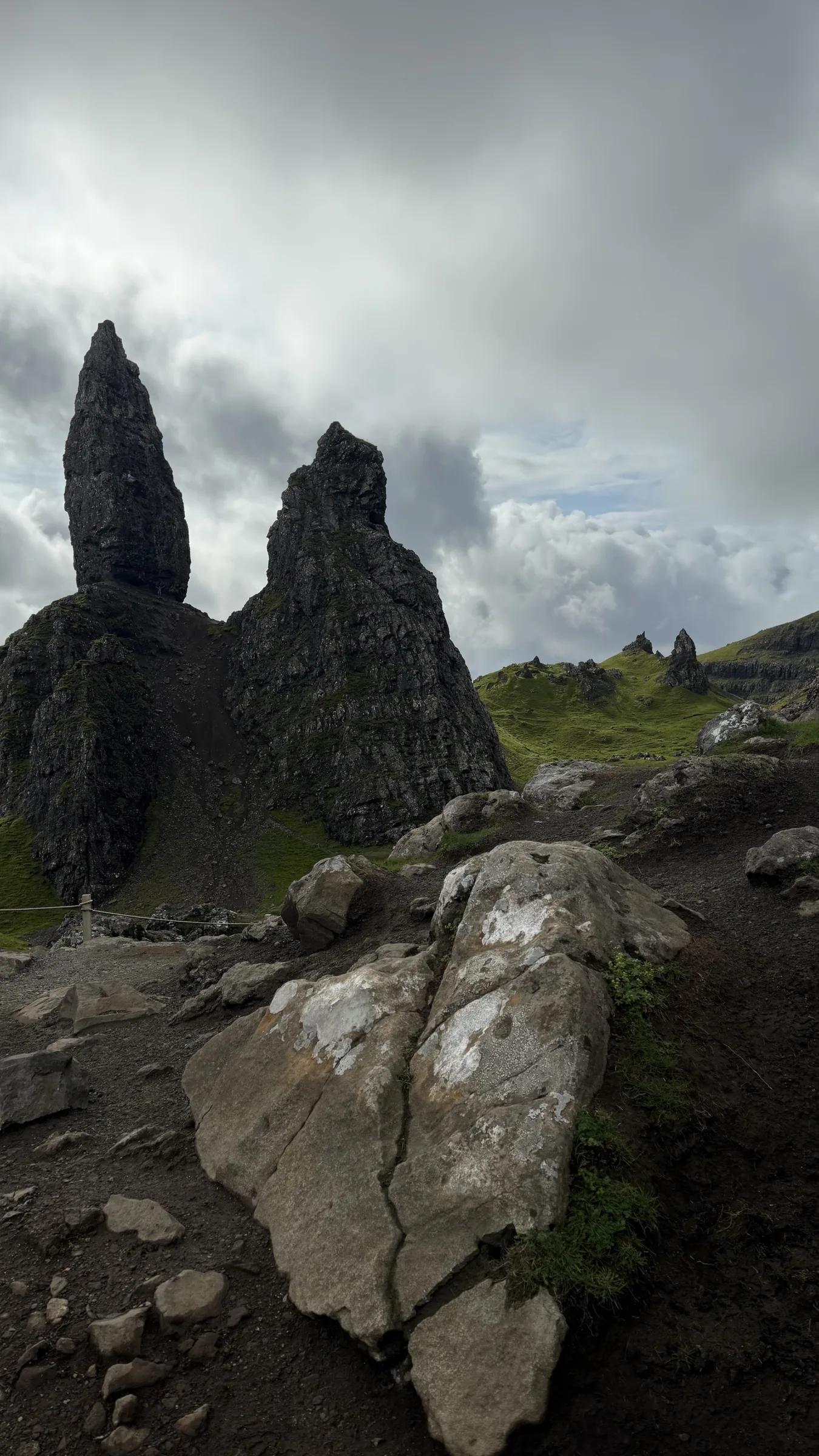
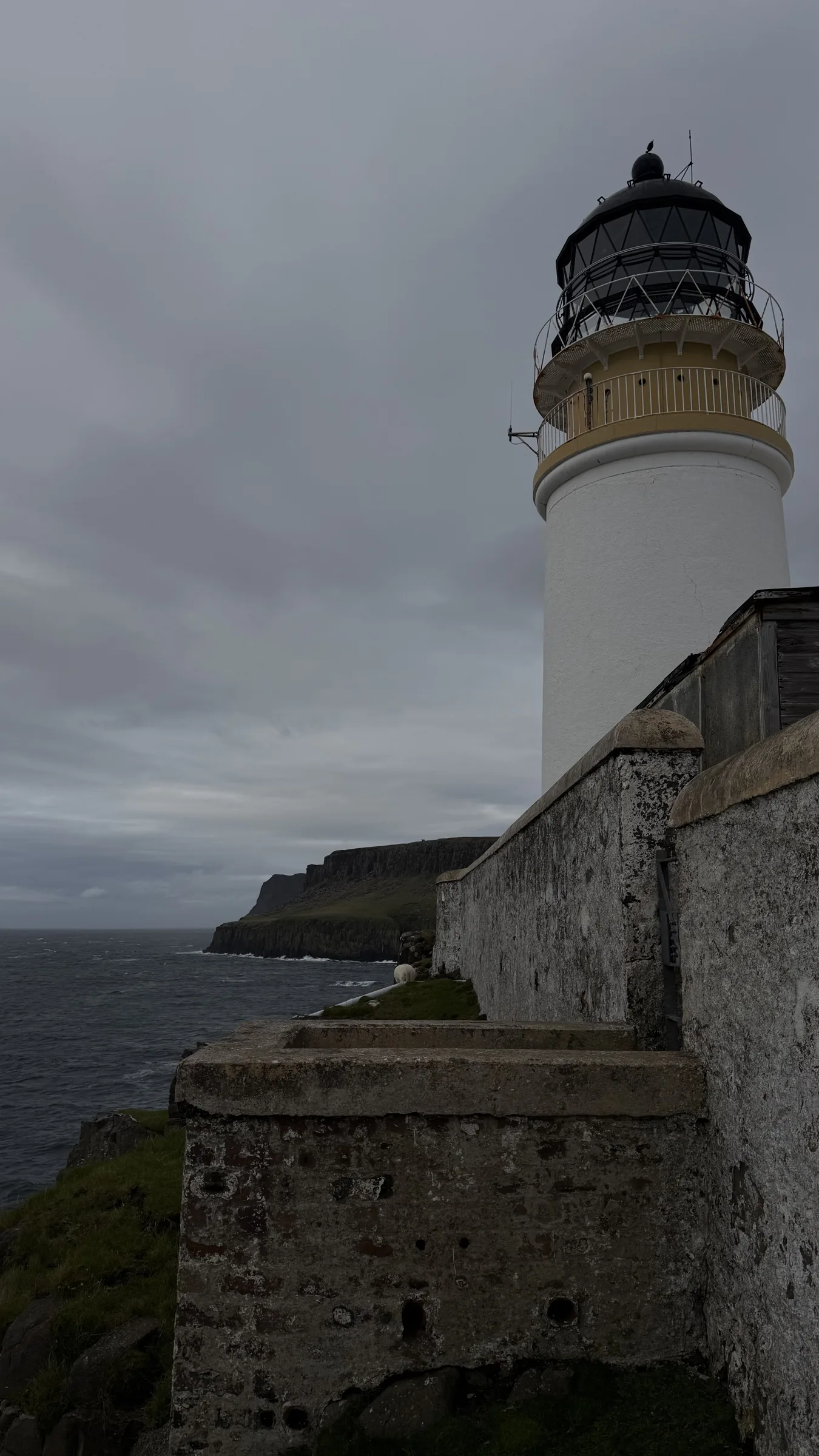
The Skye collection here is small: two views of the Storr and one of Neist Point lighthouse. Cloud holds them together. Instead of hiding the weather, the photographs make it part of the subject. Dark pinnacles, pale loose stones and a white tower remain distinct even when the sky gives them little direct light.
Keep the ground in the photograph
The Storr images include a rough path and rocks close to the camera. These foreground details explain the visit more clearly than a crop showing only the skyline. They tell the viewer that reaching a view involves walking, and that the eye has been lifted from uneven ground towards the formations above.
When making a similar photograph, look for a safe place to stop first. A bend in the path can provide a line into the picture without needing to leave it. Keep enough foreground to show scale, then compare a second frame with less ground to see how the balance changes.
Separate the rocks with small changes
From one position, a narrow pinnacle may merge with the larger shape behind it. A modest change of angle can create a gap and let both outlines read. Move only where the path and conditions permit. The improvement should come from looking carefully, not from finding an exposed ledge.
Cloud can help separate dark stone from the background. It can also remove detail if the whole frame becomes too flat. Watch the edges and the lighter surfaces on the rocks; those are the parts an edit should preserve rather than wash into a single grey mass.
Let the lighthouse stay white
At Neist Point, the tower is the lightest substantial form in the archive frame. The wall below is rougher and darker, and the sea is partly visible beside it. That arrangement makes the building readable without a highly saturated sky.
Try exposing for the tower and checking whether its surface still has detail. A little adjustment to shadow areas may help the wall, but the white should keep some texture. The Northern Lighthouse Board identifies Neist Point as an operating light with no public access, so keep the story focused on its exterior and coastal setting.
Record what the weather allows
A photograph cannot promise the next traveller the same view. The Storr visitor guide warns that conditions change and advises checking the forecast. Use a diary caption to describe the frame, such as cloud behind a pinnacle, rather than calling a particular month guaranteed clear.
Save a location and route note while the sequence is fresh. That will help distinguish the two Storr photographs when you later select an image, and prevents a caption from acquiring a precise viewpoint name that you no longer remember.
Edit a sequence with different scales
Use a wider rock view, a path image and the lighthouse as three separate kinds of attention. They do not need identical crops or equal brightness. Their relationship comes from the weather and the material, while the difference in scale keeps the diary moving.
End the selection when each photograph adds something. Several near-duplicates can make a short visit appear longer without explaining it better. These three frames are enough to show the island’s dark stone, the walking surface and one built structure standing against cloud.
Sources & visitor information
Destination information checked on 4 October 2026. Use the linked venue or authority for current access and booking details.
← More from the journal