Neist Point: a lighthouse visit with time for the coast
The approach, the wind and the return deserve as much thought as the photograph.
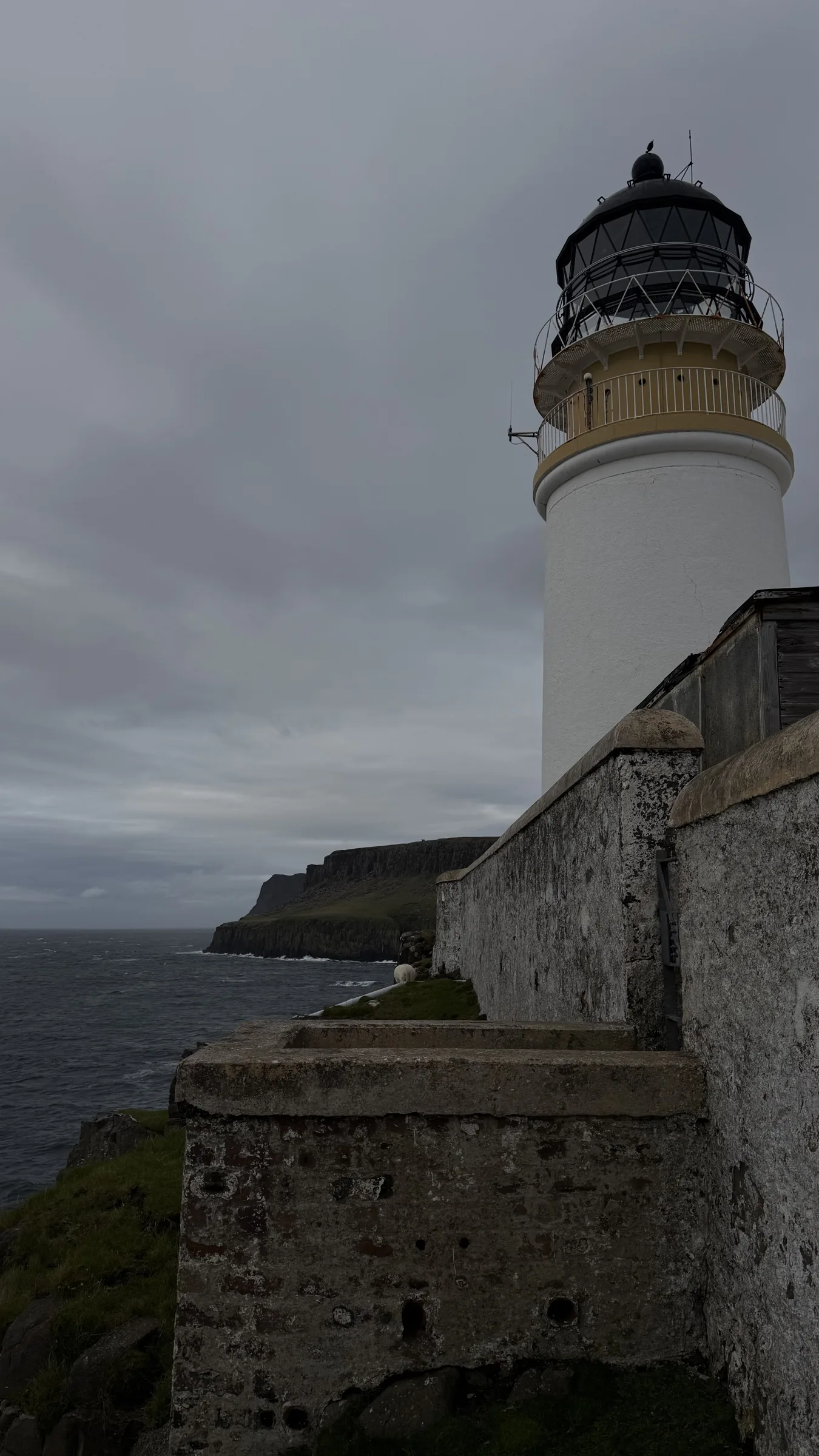
Neist Point is a coastal outing before it is a lighthouse photograph. Give the drive, the conditions and the return enough room in the day. The archive image is close to the white tower, with a stone wall and a grey sky; it shows an exterior view, and that is the right expectation to carry into your planning.
Plan an exterior visit
The Northern Lighthouse Board places Neist Point near Glendale on Skye’s western tip. It dates the light’s first operation to 1909 and lists no public access to the lighthouse. Do not arrive expecting an interior tour or a climb into the lightroom.
The tower and its setting can still be the focus of a visit. Decide how much walking you want to do and check current local information about the approach. A photograph taken close to a building does not establish that every visitor can comfortably reach that position in every condition.
Give the journey daylight
Plot the full return to your accommodation before choosing a departure time. A late coastal photograph can be attractive, but it also commits you to travelling back after the light changes. Include time for slower road sections, stops and the possibility that you leave the viewpoint sooner than expected.
If you are unfamiliar with local roads, study the route while you are indoors and have a reliable connection. Save it offline and keep directions available to someone who is not driving. The day will feel calmer when the destination is clear before the narrower roads begin.
Let conditions decide how far you go
Check wind and rain as well as temperature. At a coastal viewpoint, remaining upright and warm matters more than reaching a position seen online. Wear footwear that grips, carry a waterproof layer and keep back from exposed edges. Choose your stopping place according to the conditions in front of you.
There is no need to wait for a dramatic burst of light if the weather makes the visit uncomfortable. A shorter outing can be a complete one. Agree within the group that anyone can call for a return without having to justify it against the planned photograph.
Put the lighthouse in its setting
Take one view that includes the land and sea before making a close picture of the tower. The broader frame explains why a navigational light belongs here. In the archive, the white structure stands against cloud while the surrounding stone provides texture and a sense of shelter.
Keep edits modest enough to retain those differences. Brightening the building until it loses detail can make the image less legible. Cloud has a shape and tone of its own, so there is no reason to replace it with the colours of a sunset that was not present.
Leave the return as part of the outing
Allow time to walk back at an ordinary pace. Put the camera away on awkward ground, keep the last useful daylight in mind and check that everyone is comfortable before starting the drive. A spare dry layer can make the onward journey more pleasant after an exposed stop.
Use the coastal visit as the main purpose of this part of the day rather than adding a long chain of distant viewpoints. That leaves room to notice the ordinary details: a wall, the line of the tower, the colour of the water and the changing height of the cloud.
A few useful answers
Can visitors enter Neist Point lighthouse?
The Northern Lighthouse Board lists no public access. Plan for exterior views and the coastal setting.
Should I plan the visit around sunset?
Only if the conditions, daylight and return journey fit your experience. A daylight coastal visit offers more room for assessing the route.
Sources & visitor information
Destination information checked on 4 October 2026. Use the linked venue or authority for current access and booking details.
- Northern Lighthouse Board: Neist Point ↗
- VisitScotland: Isle of Skye ↗
- Scottish Outdoor Access Code: enjoying the outdoors ↗