Bourton and the Slaughters: plan a village walk properly
Choose the public paths first, then give each village time beyond its best-known view.
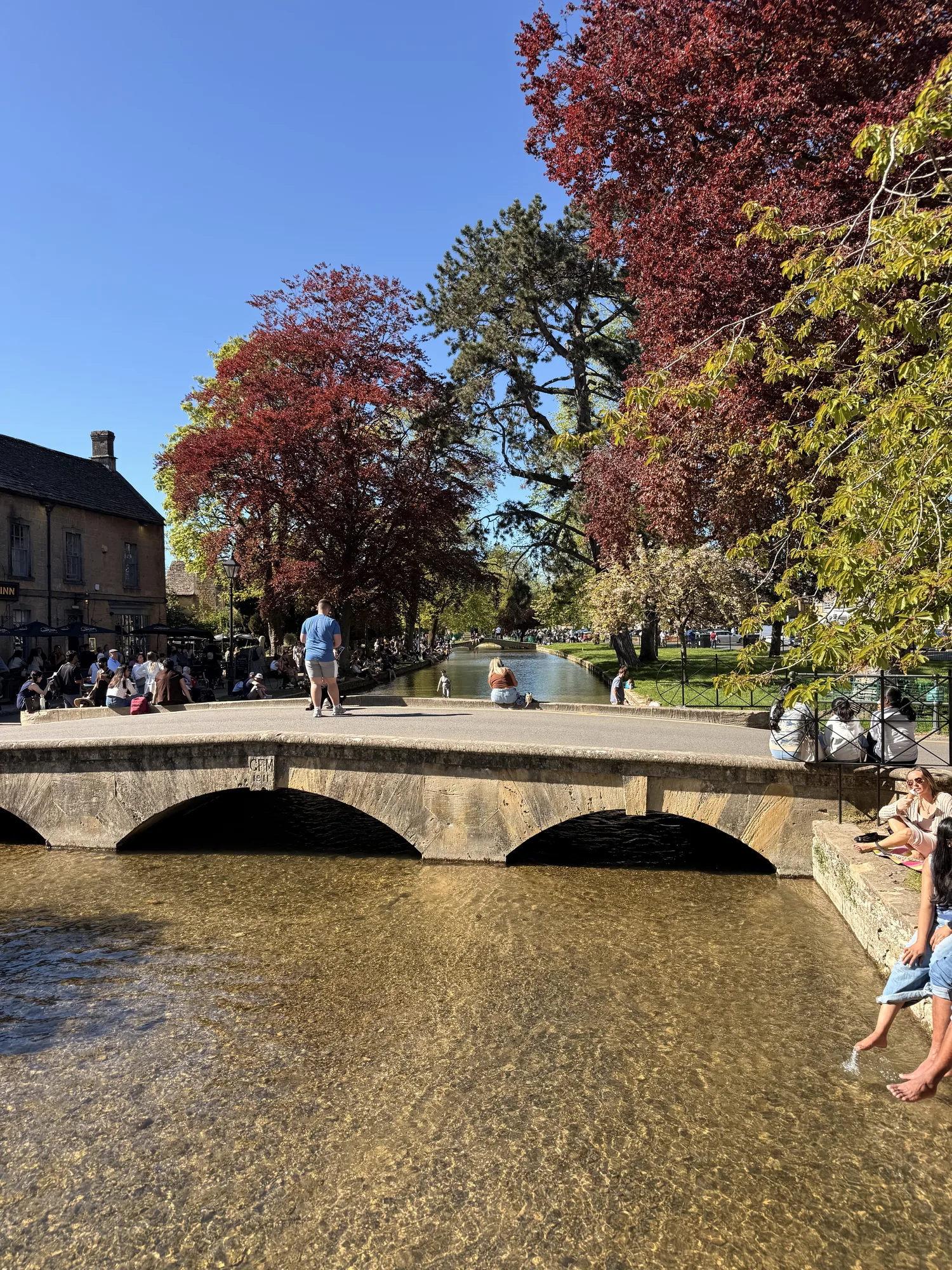
Bourton-on-the-Water and Lower Slaughter make a tempting pairing because both gather around small rivers and stone buildings. The walk between them should be planned as a countryside route, not inferred from a straight line on a phone map. Give the outing a clear start and return, then leave time to look around each village. The Bourton cover places a low stone bridge across the water, with red foliage above the far bank.
Decide how much walking you want
Choose between a short Bourton visit with a separate journey to Lower Slaughter and a properly mapped walk connecting the villages. The second option needs suitable shoes, weather preparation and a route that follows public rights of way. A road connection does not automatically provide a comfortable pedestrian route.
Use a current walking map or the local visitor route information for directions, gates and the intended return. Save it offline and check where the route starts. If you add Upper Slaughter, account for the extra walking before leaving, rather than extending the day because the next village looks close on the screen. A smaller circuit with time to pause is more useful than a longer route followed under pressure.
Begin with Bourton’s river
The River Windrush forms the centre of Bourton’s village scene, as the district council’s conservation description explains. Give yourself time on the public paths around it before deciding which attraction to visit. A low bridge and a line of façades can tell the story of the place without buying a ticket for every nearby activity.
Busy bridges require some patience. Move aside to make a photograph and let people pass before trying another frame. Take a wider view that shows the water’s route through the village, then a detail if the light suits it. Avoid wading or stepping into the river simply to make the picture look different. The route and the view are already connected from dry ground.
Change pace in Lower Slaughter
Lower Slaughter’s smaller lanes ask for a quieter approach. Keep to public space, respect homes and gardens, and leave room for local vehicles. Compare the stonework and the relationship between buildings and water with what you saw in Bourton; that gives the second village a purpose beyond another collection of cottage photographs.
A snack or drink is useful only if the place you intend to use is open and suits your group. Carry water and something small to eat so a closed business does not force an early end to the walk. If you want to visit a particular mill or other interior, check its current arrangements separately. A village walk should still work when one door is closed.
Keep the return clear
If you parked in Bourton, make sure the chosen route brings you back without an unplanned road walk. If you arrive by bus, check the last realistic service before starting and allow time at the stop. Do not depend on finding an available taxi after you have become tired in a small village.
Field paths can be muddy after rain even when the village pavements are dry. Follow signs, shut gates as directed and keep dogs under proper control around livestock. When the weather is poor, choose shorter village sections instead of forcing the full connection. The appeal of this day is the change between water, cottages and open ground, and that change is easier to enjoy when the logistics have already been settled.
A few useful answers
Can I walk between Bourton and Lower Slaughter?
Choose a published route that uses public rights of way and check its length and terrain. Do not substitute a driving route for walking directions.
Should I add Upper Slaughter?
Add it only after checking the full route and return. It is a separate extension, rather than a compulsory part of the day.
Sources & visitor information
Destination information checked on 4 October 2026. Use the linked venue or authority for current access and booking details.
- Bourton-on-the-Water conservation area ↗
- Lower Slaughter conservation area map ↗
- Cotswolds towns and villages ↗