A slow walk along London’s South Bank
Follow the river, leave room for a gallery, and give London a little time to settle.
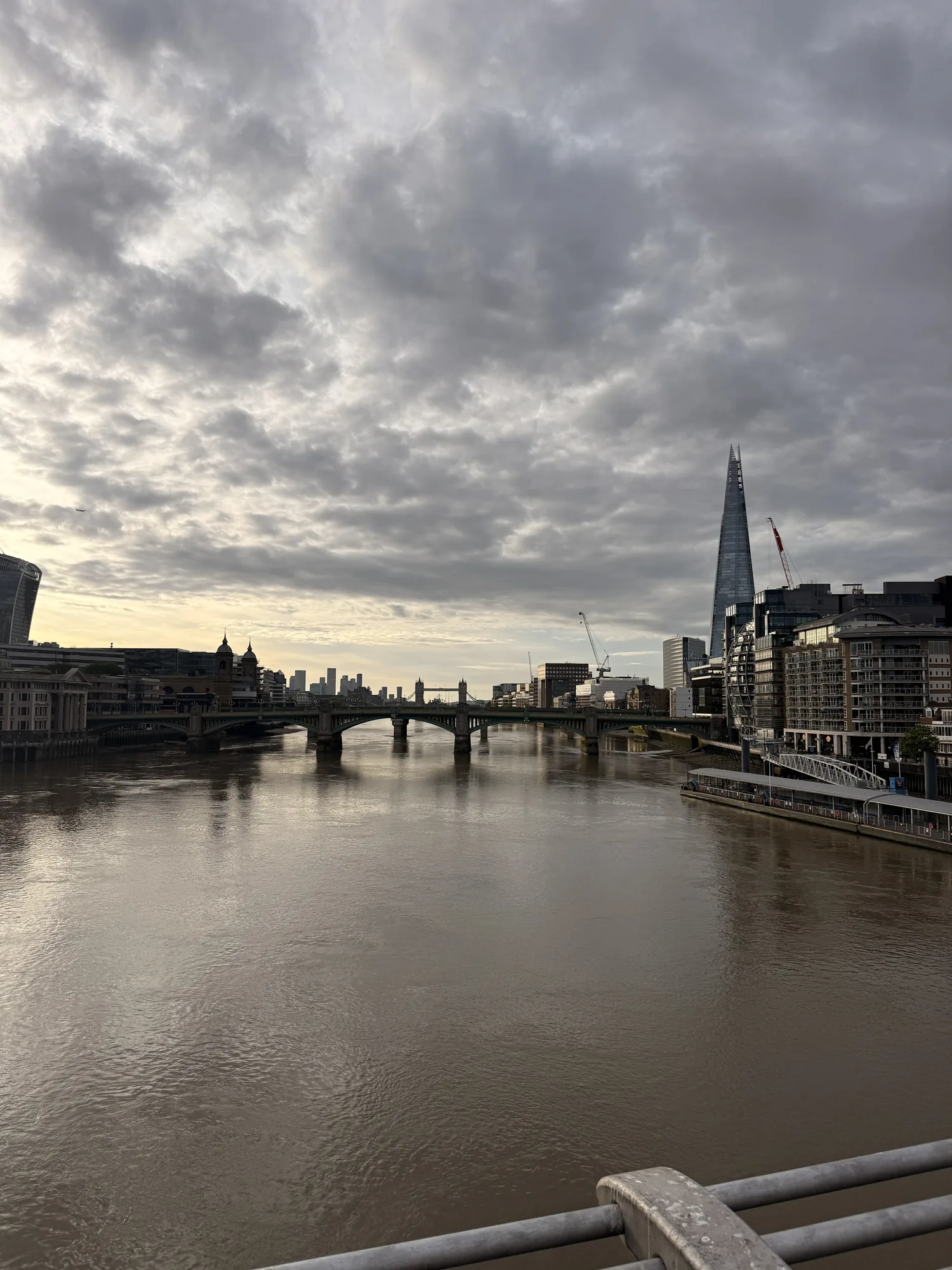
The South Bank makes a useful first London walk because the Thames does most of the organising. Westminster provides the starting landmark, the riverside path keeps the direction clear, and bridges offer several places to cross or leave the route. Plan an unhurried half day rather than a string of timed bookings. In the archive view, layered cloud leaves the river silver-grey beneath the skyline.
Begin opposite Westminster
Start on the south side of Westminster Bridge and step away from the bridge approach before stopping for photographs. From the riverside, the Palace of Westminster has space around it; on the bridge itself, pedestrians compete with traffic and a constant flow of people taking the same picture. Walk towards the London Eye without treating a ride as an automatic part of the route.
If the Eye is the reason for your visit, make its ticket the day’s fixed point and build the walk around it. Otherwise, the exterior is enough to orient you. Take a few minutes to notice the river traffic and the changing shape of Westminster behind you before continuing east.
Leave one cultural stop open
The Southbank Centre and National Theatre make this stretch more than a procession of landmarks. Look at their programmes before travelling, then choose one activity that fits your interests. A concert or performance needs a reservation and an arrival buffer; a casual look around a public foyer depends on the venue’s arrangements that day.
Keep lunch flexible until you know where you want to stop. A meal halfway through the walk gives tired feet a break and avoids turning the afternoon into a search for somewhere open near the final station. On a dry day, buy only what you can carry and dispose of the packaging properly.
Read the river as you go
Near Waterloo Bridge, look back as often as you look ahead. A riverside route produces different compositions when the curve of the Thames opens or a bridge briefly frames the opposite bank. The best photograph may be a small detail: a red boat against grey water, a railing shadow, or the layered rooflines beyond it.
Use the broad public walkway without spreading bags or tripods across it. If a section is crowded, continue for a few minutes and try again. Overcast light works well for buildings because it softens deep shadows; sunshine creates stronger contrasts, especially around midday. Neither condition needs rescuing with an overfilled itinerary.
Finish before the walk becomes a march
Blackfriars is a sensible stopping point for this shorter South Bank day. If you still have energy, continue towards the Tate Modern area, but count that as an extension. The official visitor guide places South Bank between Lambeth Bridge and Blackfriars, so a walk all the way to Tower Bridge is a longer Thames outing.
Check your return journey with TfL before the day begins, especially if you need a step-free station. Wear shoes that already feel comfortable and carry a layer for the riverside wind. This walk is most useful when it stays adjustable: one booked event, a stretch of river, and permission to stop when your feet have had enough.
A few useful answers
How long should I allow for a South Bank walk?
Allow a half day if you want a meal and a cultural stop. A direct walk takes less time, but that leaves little room for photographs or sitting by the river.
Do I need tickets to walk along the South Bank?
The public riverside walk does not require an attraction ticket. Paid attractions and performances have separate booking arrangements.
Sources & visitor information
Destination information checked on 4 October 2026. Use the linked venue or authority for current access and booking details.
← More from the journal