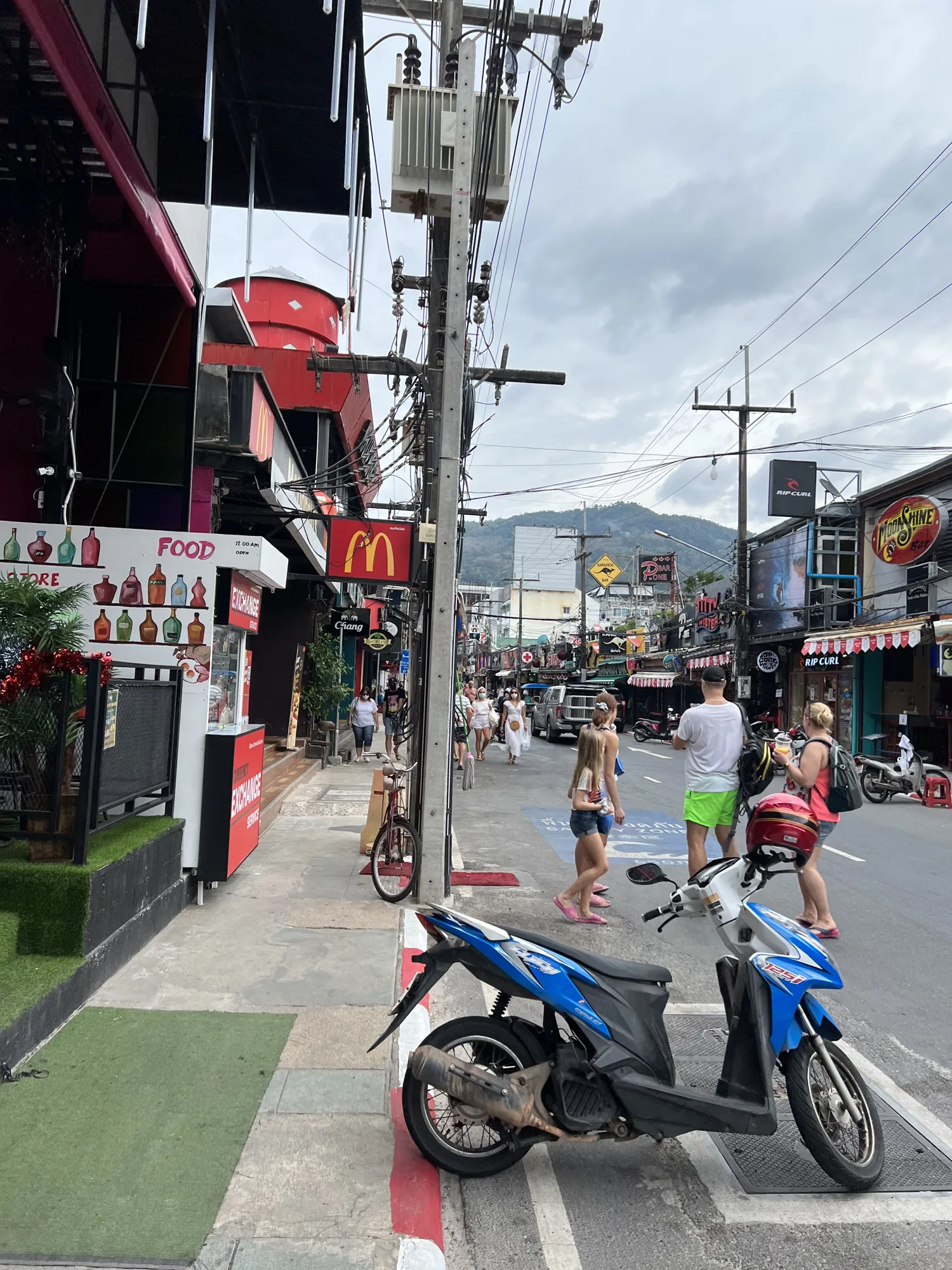
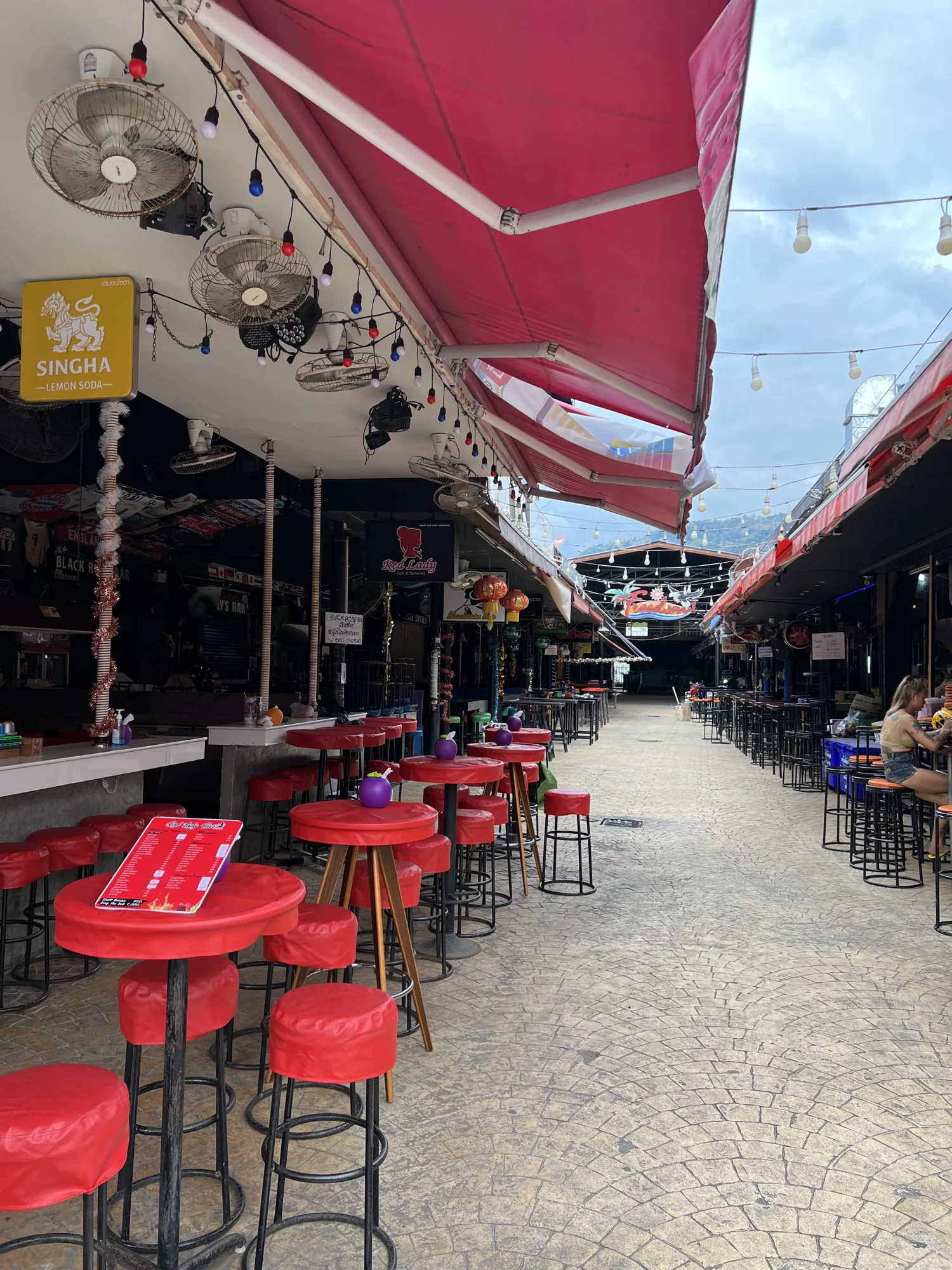
Patong in daylight: the streets before the evening
Red stools, awnings and the working edges of an evening district.
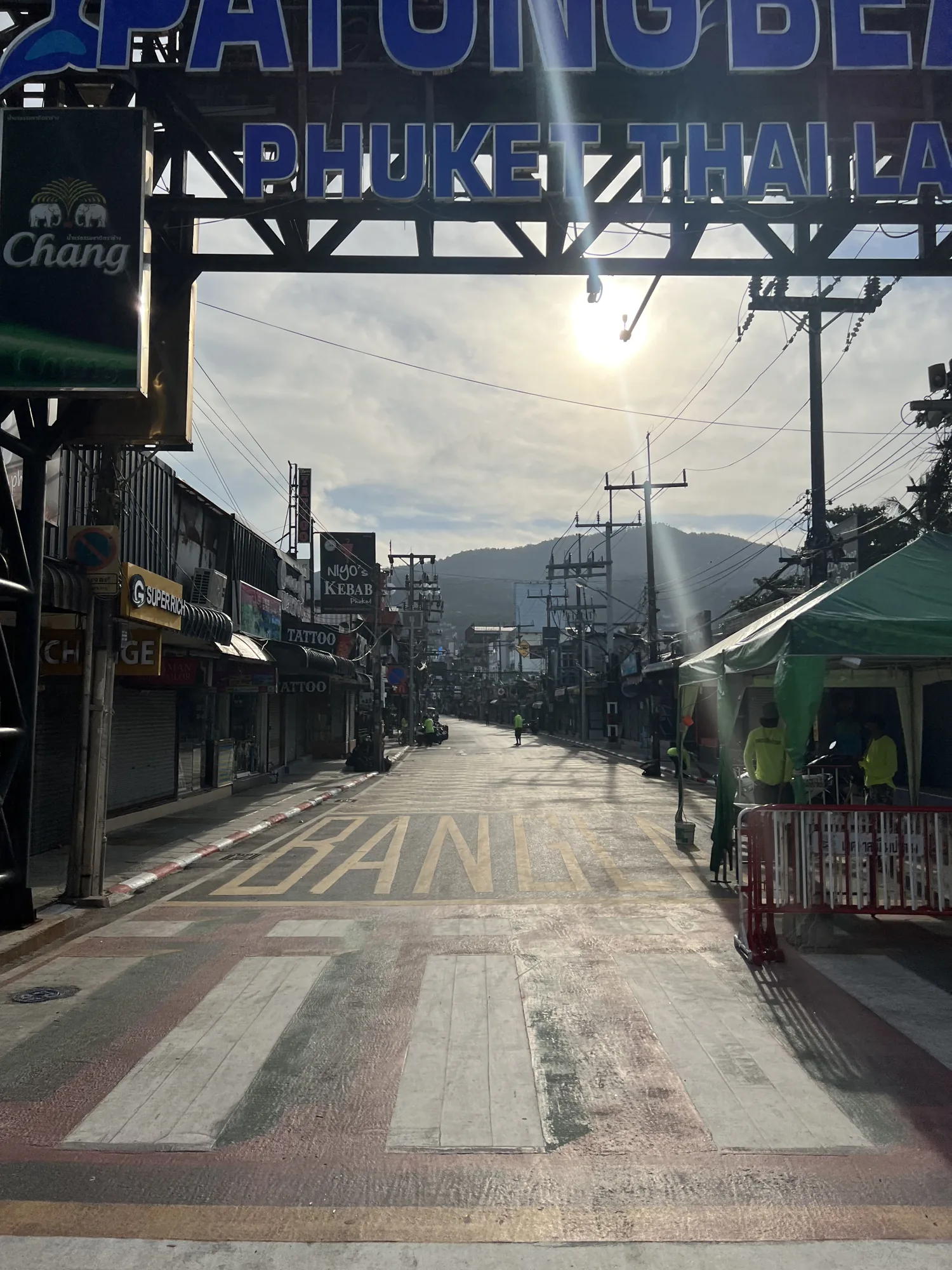
Patong’s street photographs look different in daylight. Open fronts, red stools and awnings are visible before coloured light takes over. One archive frame looks into a covered lane; another records the Bangla Road entrance. Together they show an entertainment district as a built place, with surfaces, routes and ordinary practical details that disappear in a night-time blur.
Read the awnings as part of the street
A red awning extends over a narrow lane in the archive, repeating the colour of the stools below. It divides the frame into bright open ground and shaded interiors. That simple relationship explains the street more clearly than a photograph focused on a single sign.
If you are making a similar image, watch where the shade ends. A small change of position can retain detail inside without losing the daylight outside. Keep the lane passable while taking the picture; a doorway that provides a useful frame is also somebody’s entrance.
Notice what sits at the edge
The photographs include scooters, cables and chairs as well as building fronts. Those details make the district legible. Removing every practical object from a crop can leave a polished image that says less about how the street is used.
Choose the edge deliberately. A scooter can help show scale, while a large sign may pull too much attention from the rest of the frame. Make a wide view first and a second, tighter one afterwards. Keep whichever explains your subject, rather than always choosing the tidiest image.
Let the entrance establish the location
The Bangla Road sign supplies a useful location clue in the archive. It makes the following pictures easier to understand without forcing an exact venue name onto an image whose address has not been recorded. The caption can stay direct: an entrance, a lane, stools outside a bar.
For your own diary, photograph a street sign before the smaller details. It is a simple way to keep a sequence organised. Save a written district note too, since the picture you later publish may be cropped tightly enough to lose the sign.
Keep people incidental
Daylight streets are workplaces and routes for other visitors. Photograph the setting without turning an identifiable stranger into the main subject of an unrequested portrait. If a staff member, performer or vendor is central to the picture, ask and accept the answer before raising the camera.
The same care applies inside a venue. An open front does not establish permission to photograph everything beyond it. A short conversation can clarify what is welcome and may also give you a more accurate caption than a guess made from the street.
Choose a sequence that changes scale
Begin with the road entrance, move to the lane and finish with a detail of colour or shade. Each picture then adds information: where the walk begins, how the space is arranged and what caught the eye within it. Avoid publishing several frames with the same stools in almost the same position.
Keep daylight in the final edit. The stools do not need stronger red and the street does not need invented evening colour. The plain view already offers a useful contrast within a Phuket trip: a coastal island also contains busy, built streets whose character can be studied before the music begins.
Sources & visitor information
Destination information checked on 4 October 2026. Use the linked venue or authority for current access and booking details.
← More from the journal