Photograph Nusa Penida without rushing the viewpoints
Wide view, small detail, then a moment without the camera.
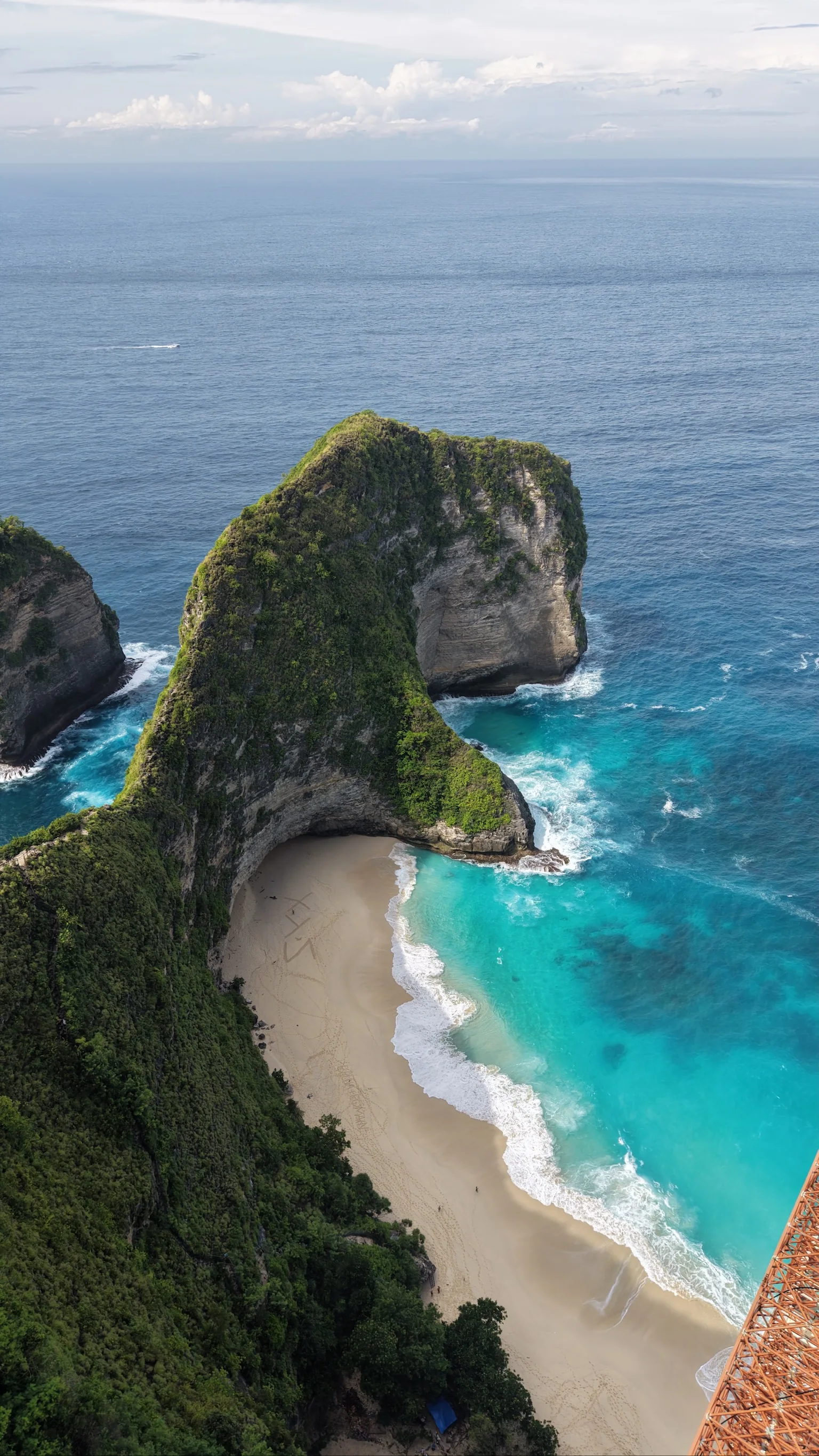
A useful Nusa Penida photo set can be small: one frame showing the coastal shape, one showing scale and one close detail. Kat’s Kelingking and Broken Beach photographs provide examples of those different jobs. Plan the visit around permitted viewpoints, and let the light you actually find guide the pictures.
Give the wide frame enough room
At Kelingking, the curve of the headland is the subject. Include enough sea and beach for that shape to read clearly instead of cropping tightly around a single rock face. Look at the edges of the screen before taking the photograph; an accidental cut can make the coast feel cramped.
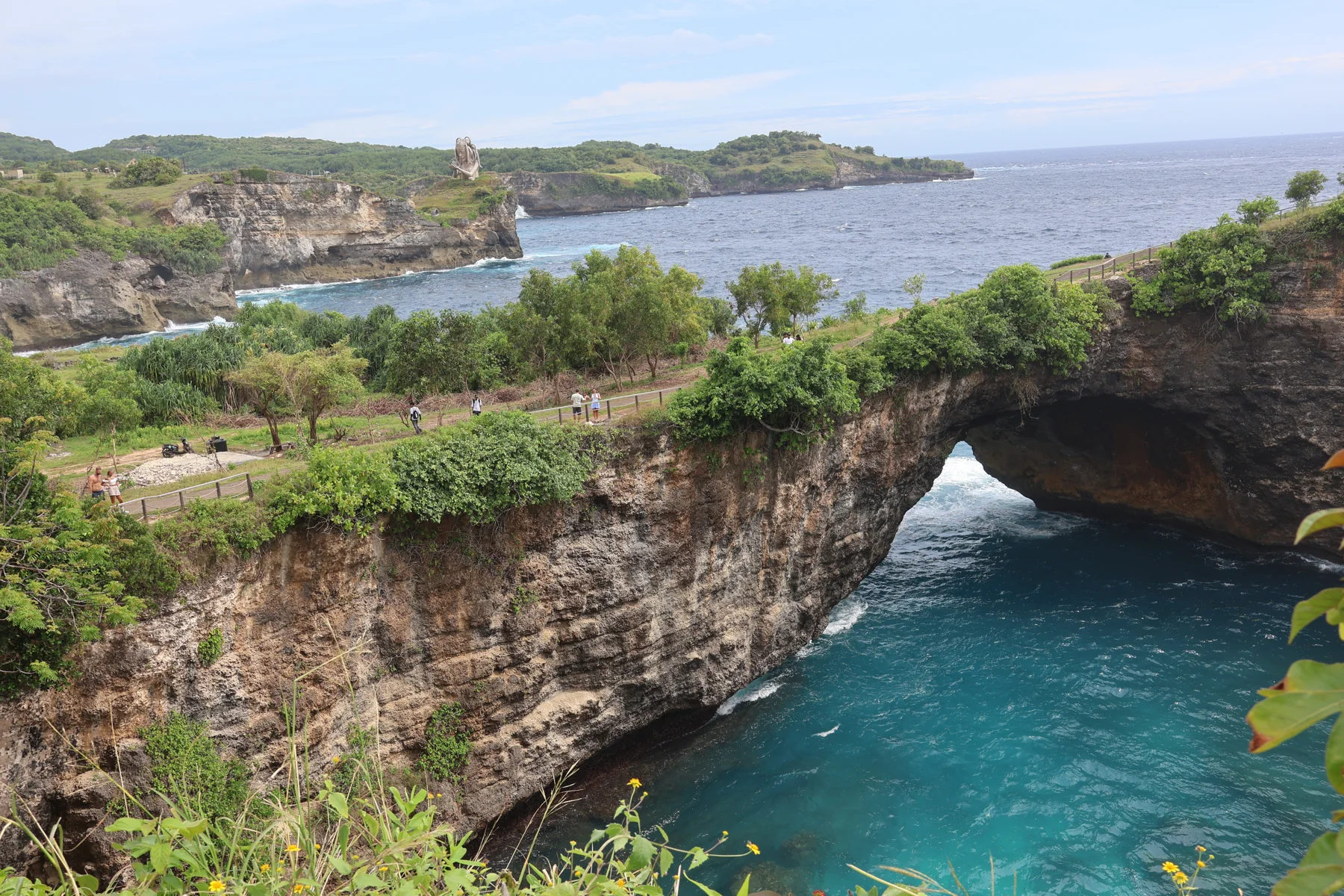
At Broken Beach, aim to show both the arch and the cove. If the water occupies the entire frame, the image may lose the feature that makes the place recognisable. Stand in a secure permitted area and adjust the framing there, rather than moving closer to a cliff edge.
Use scale without directing strangers
A person already walking on a public path can give the landscape scale, as in Kat’s wider Broken Beach frame. They do not need to become the main subject. Avoid interrupting other visitors or asking anyone to stand in a place that makes them uncomfortable.
If you prefer an empty landscape, wait briefly where there is space for people to pass. Decide how long you are happy to wait, then accept the scene. Removing every sign of a busy attraction is not essential to making an attractive travel photograph.
Make the second image different
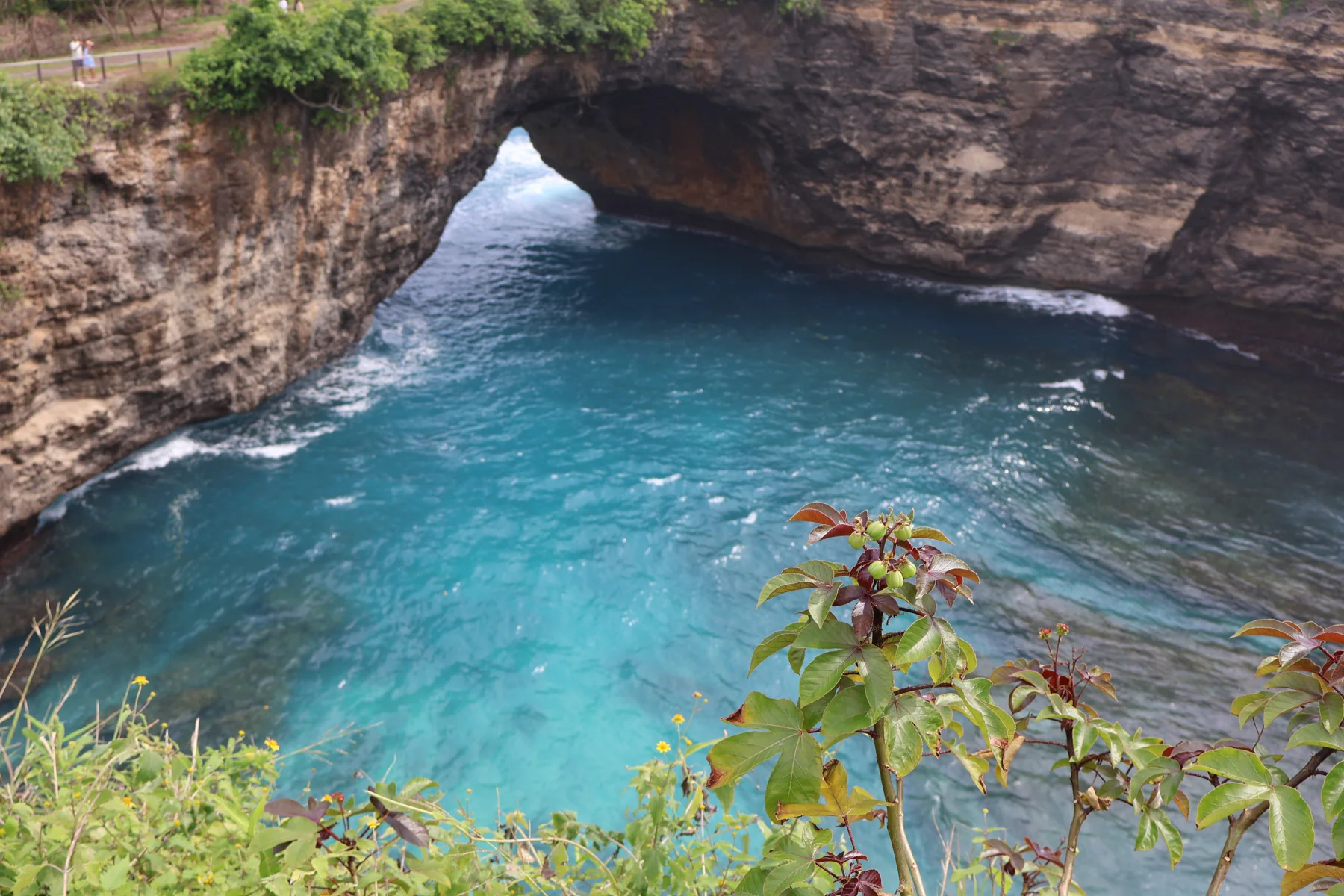
Look for foreground vegetation, surf patterns or layers in the cliff. Kat’s closer Broken Beach image uses leaves and small flowers while keeping the arch visible. It adds information to the gallery instead of repeating the same wide composition with a minor crop.
Check whether a foreground object helps or blocks the subject. Try a simpler frame if the leaves become distracting. Keep the camera level where a visible horizon matters, and review one image carefully before taking another dozen versions.
Keep photography inside the travel plan
If you are crossing for a day trip, choose the west-coast locations you most want to photograph and protect the return buffer. A hopeful shot at five distant viewpoints is usually less useful than a considered set from two. Put a food break between long stretches of looking and walking.
Construction equipment visible in an archive photograph belongs to the landscape as it was recorded. Do not label it as an operating lift. Keep captions precise, preserve the original files and finish each stop with a little time to look at the coast without the screen.
← More from the journal