Notting Hill beyond the photo stop
Pastel walls are the opening detail. Leave time for the shops and the street around them.
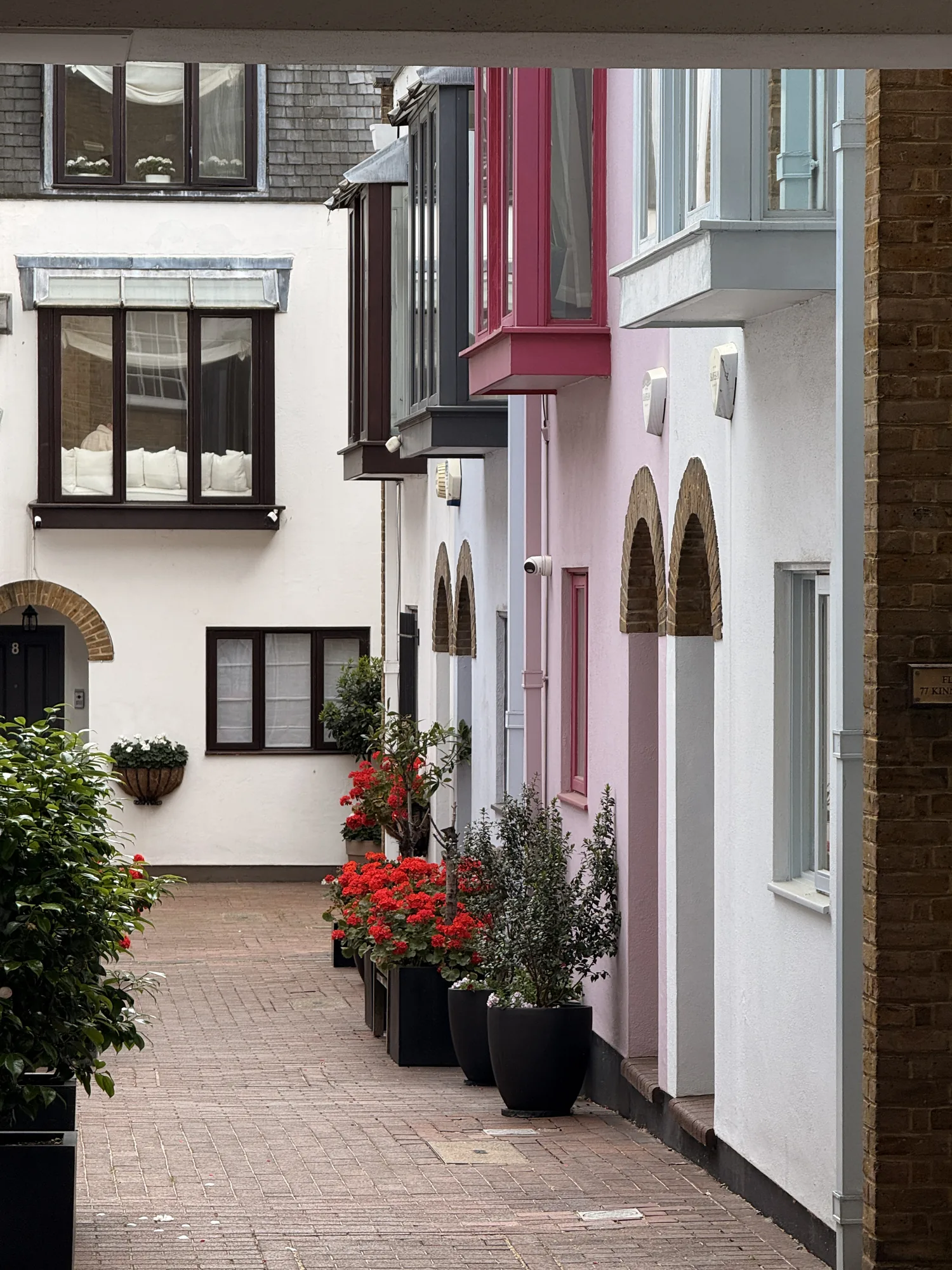
Notting Hill is easy to reduce to a handful of colourful front doors. A more satisfying visit gives the neighbourhood a few hours: Portobello Road for browsing, a quieter street for looking at the buildings, and a break before the photographs begin to repeat. Keep the route light enough to follow what interests you.
Choose market browsing or a street walk
Decide what you want from the visit before picking a day. A market outing depends on which traders are operating and where; a walk through the neighbourhood is less tied to a stall schedule. Check the current Portobello market information rather than assuming every section works to the same timetable.
If browsing is the priority, carry a bag that leaves both hands free and decide on a sensible spending limit beforehand. Take time to look at the object or garment itself instead of buying because the stall feels like part of a holiday scene. Ask about condition and payment arrangements before committing. A purchase should still seem useful when you are no longer standing on Portobello Road.
Walk with the neighbourhood in view
Use Portobello Road as the main thread, then choose one nearby side street rather than a long collection of film locations. The official London guide lists colourful terraces, independent shops and the market among the area’s main draws. Treat those as choices, not a compulsory route.
Look beyond the paint colour. Repeated steps, window proportions and railings explain why a row of houses has a particular rhythm. A single doorway can make a pleasant image, but a wider frame shows how it belongs to a street. When traffic or parked cars complicate the view, try a detail instead of waiting impatiently for the entire road to empty.
Photograph homes with some restraint
Many appealing façades are people’s homes. Take photographs from public space, keep entrances clear and avoid including house numbers or close views through windows when they add nothing to the picture. Do not sit on a doorstep to arrange a portrait or move plants and bins for a cleaner background.
On narrow pavements, pause where others can pass and put the camera away when a resident needs access. There is no need for every colourful door to become a stop. Pick a few images that differ in scale or light, then continue. A more selective set leaves room for photographs of the road itself, shop signs and the small details that explain the afternoon.
Finish before the map grows
Leave a break in the middle of the visit rather than arriving hungry and choosing the first queue. Check a café’s menu and access before joining it; this guide does not assume a particular restaurant is right for your budget or diet. A simple pause can reset your attention before the quieter part of the walk.
Use TfL’s journey planner for the station that best matches where you finish, instead of returning automatically to your arrival point. If the market is crowded or the weather turns, shorten the browsing section and keep one comfortable street walk. Notting Hill works well as a focused half day. Adding several distant London neighbourhoods afterwards often makes the day feel smaller, because so much of it disappears in transit.
A few useful answers
Do I need a guided tour to visit Notting Hill?
A self-guided street and market visit is straightforward with a map. A guided tour is an option if you want a particular historical or film focus.
Can I photograph the colourful houses?
Photograph from public space and respect residents. Keep doorways clear and avoid close views into homes.
Sources & visitor information
Destination information checked on 4 October 2026. Use the linked venue or authority for current access and booking details.
← More from the journal