Seeing Bali’s monkeys without making them perform
Watch from a distance, keep belongings secure and let the animals choose their own day.
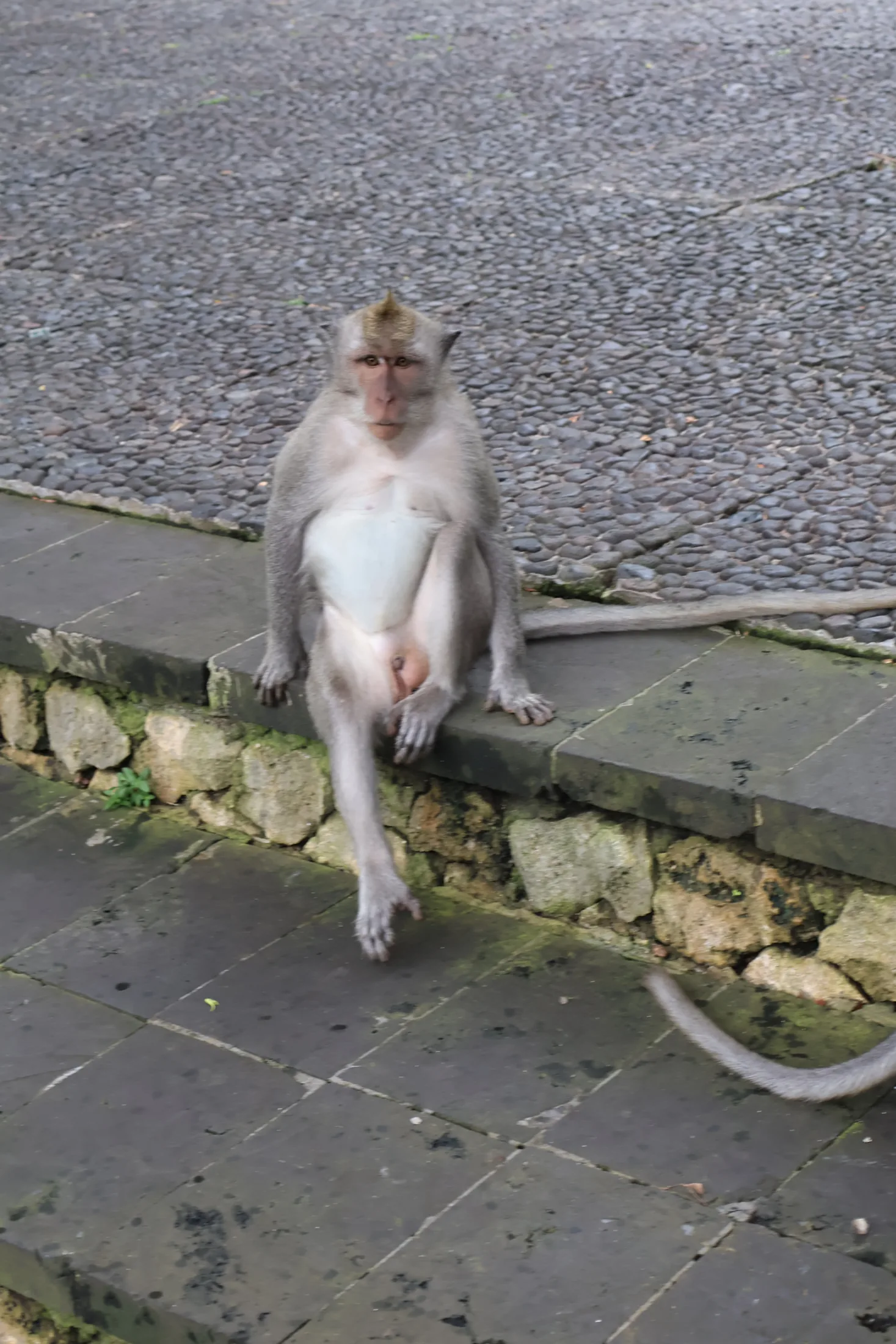
When visiting a place with monkeys in Bali, follow that venue’s rules and observe without trying to provoke a reaction. A good photograph does not require feeding, touching or encouraging an animal to climb onto someone. Kat’s photograph here was taken at Uluwatu; the linked Monkey Forest rules apply specifically to its Ubud sanctuary.
Use the rules of the place you are visiting
Read entrance signs and ask staff about anything unclear. Different venues have their own visitor routes and restrictions, so do not assume advice for one site automatically describes another. Sacred areas remain sacred even when animals are the main reason someone has come.
The Ubud sanctuary’s own guidance asks visitors to keep a respectful distance and avoid touching monkeys. Use the official venue page when planning an Ubud visit, then follow the instructions provided there on the day. At Uluwatu, use the temple’s current visitor rules.
Put small belongings away early
Secure loose accessories before reaching the area where animals are present. Keep the bag closed and avoid displaying food. The Ubud guidance specifically highlights small objects and restricts food and drinks inside its sanctuary; check the local arrangements wherever you visit.
Make these adjustments while you are still away from the animals rather than juggling a phone, sunglasses and open bag beside them. If something goes wrong or an item is taken, ask trained venue staff for help instead of attempting to recover it by offering food.
Photograph behaviour you find naturally
From a permitted public position, wait for the animal’s movement or expression without calling it over. A seated macaque, a glance towards the path or the relationship between animal and setting can carry the image. There is no need to manufacture a selfie interaction.
Keep your distance even when using a phone. A wider image showing the surroundings is preferable to moving close simply because the camera has limited zoom. If the animal approaches, stop concentrating on the photograph and follow staff guidance.
Let the visit stay respectful
Avoid chasing, feeding or directing an animal for a pose. If you are with children, supervise them and explain the boundaries before entering. Give the visitor path enough space so others can pass without crowding the animals or stepping into restricted ground.
A photograph records what happened in a moment; it should not be proof that a visitor managed to make an animal perform. Keep the caption accurate about the venue and resist generalising from one encounter. Observe patiently, ask staff when needed and leave the animal’s next move to the animal.
Sources & visitor information
Destination information checked on 4 October 2026. Use the linked venue or authority for current access and booking details.
← More from the journal