The Gilis seen from the water
Small boats, pale sand and the changing colour of the shallows.
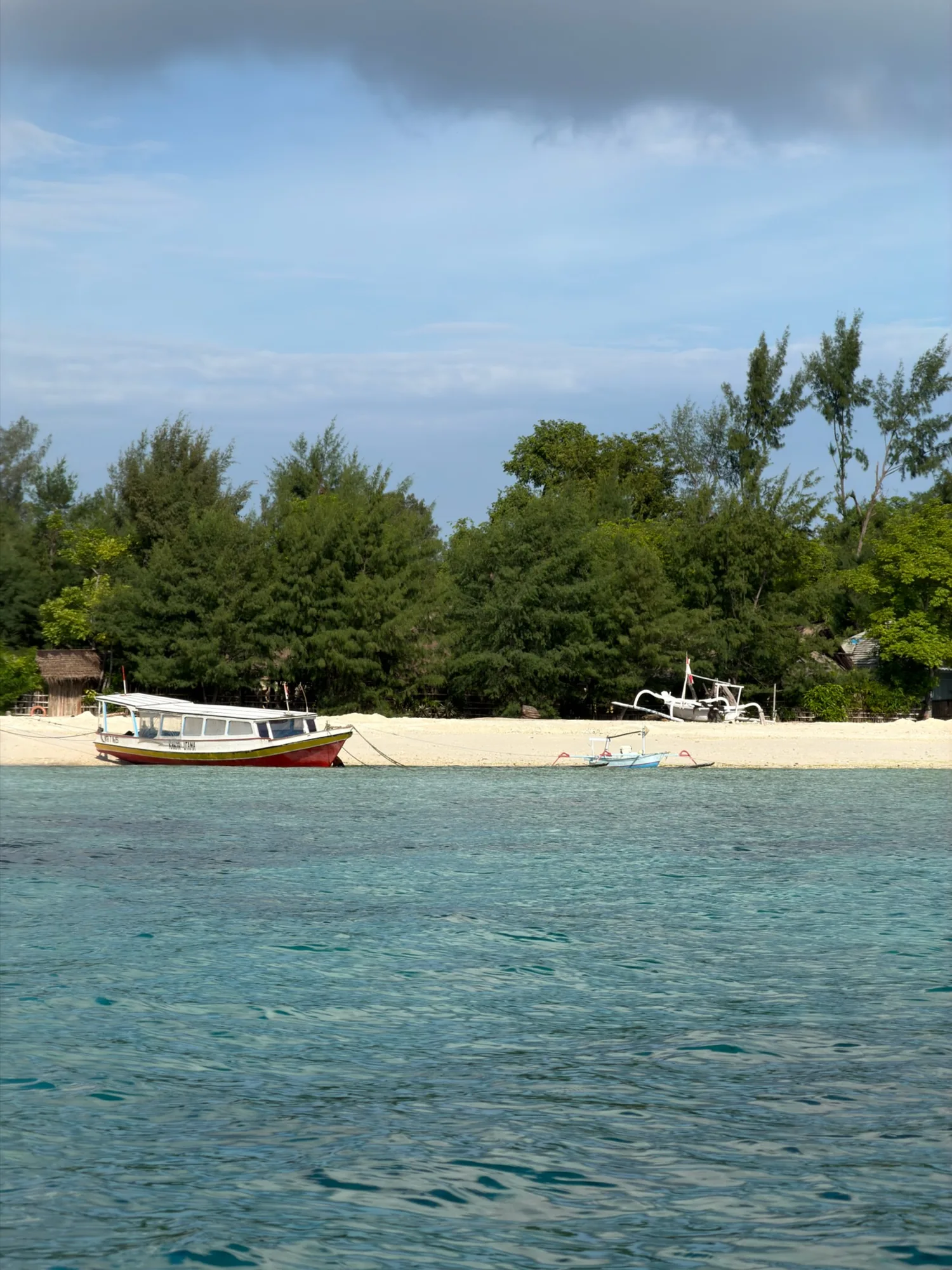
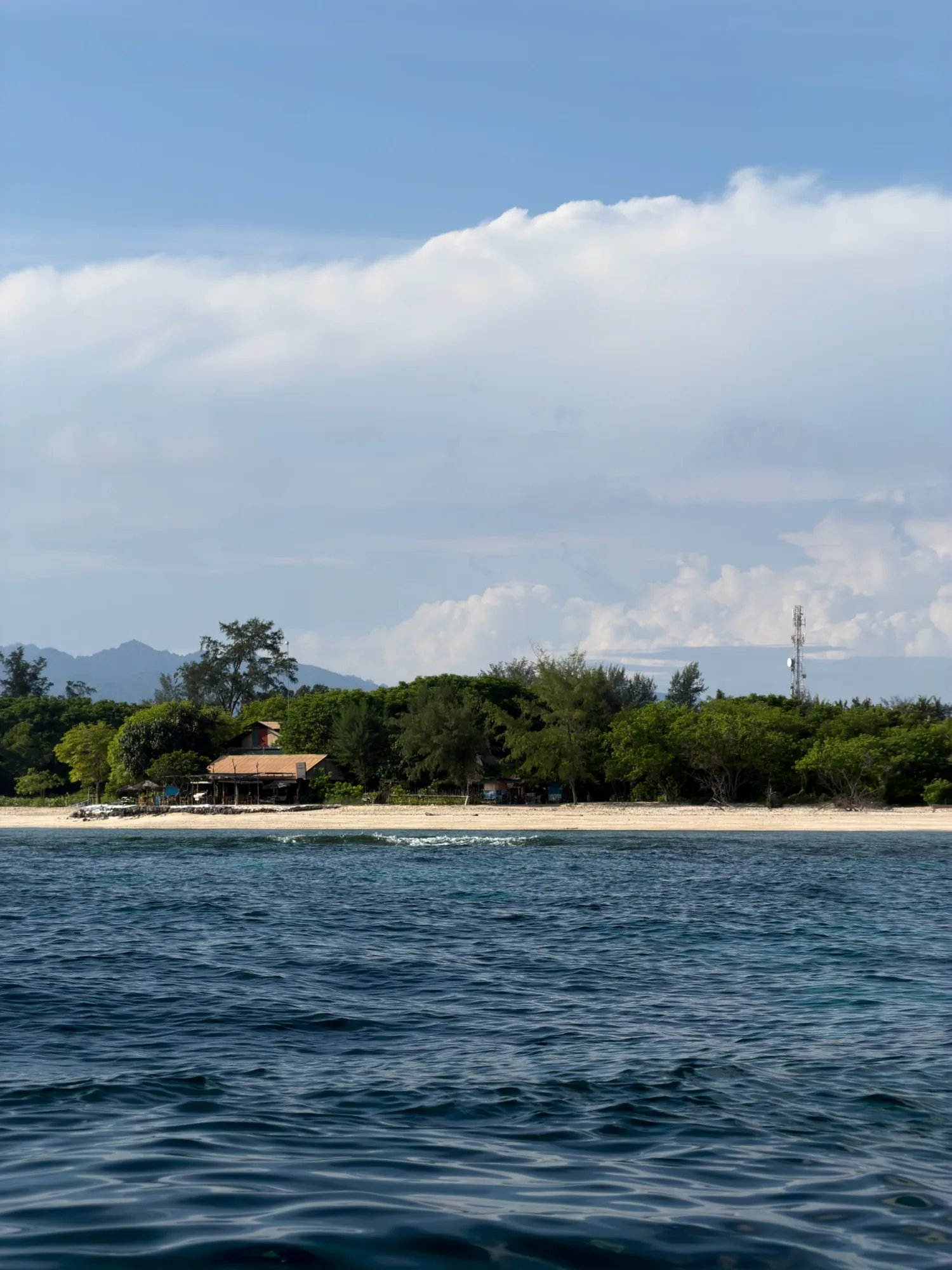
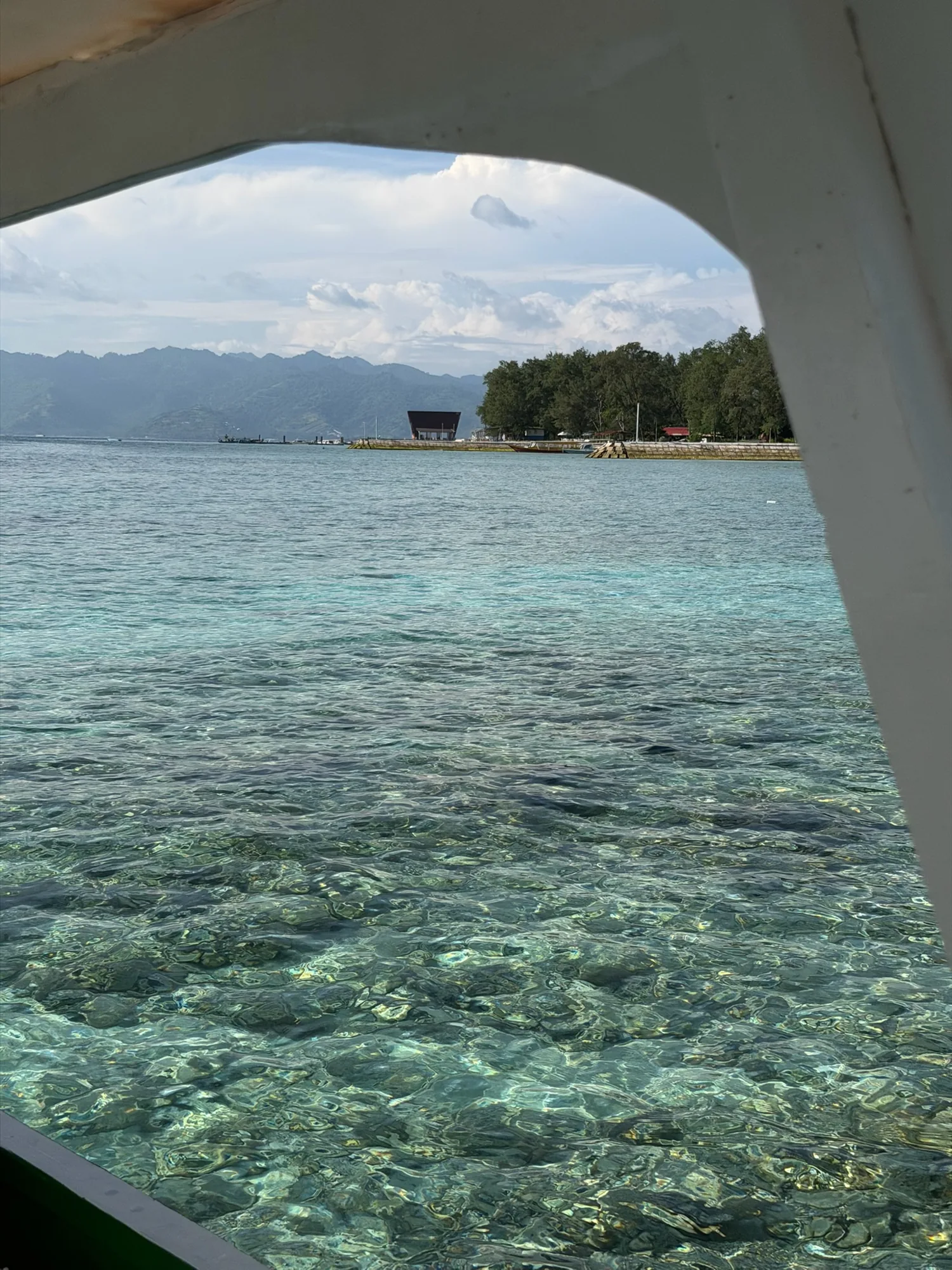
The shore looks different from a boat. Trees merge into a low green line, a pale beach divides land from sea, and the shallows change colour before reaching the darker water. These Gili archive photographs hold those layers together. Their interest lies in ordinary scale: a small boat, a low building and a great deal of sky.
A beach as a horizontal line
In one frame, the sand runs almost straight across the photograph. The trees behind it are varied in height and shade, while distant hills appear at the edge. Letting that long line remain simple gives the eye a place to rest after the moving water in the foreground.
A similar picture does not need a dramatic landmark. Look for a clear edge between water and shore, then decide how much sky it needs. A lower horizon gives the clouds more room; a higher one lets ripples and reflected light occupy the frame. Make both photographs and compare the balance later.
Boats explain the distance
A narrow boat drawn up near the sand helps show how far away the trees are. Another vessel sits on the water, with its pale sides standing out against green and blue. Such details are useful because an empty beach photograph can make the distance difficult to judge.
Keep your own position safe while photographing from a moving boat. Stay where the crew permits and keep a firm hold of the camera or phone. A tilted horizon can be corrected later; shifting around for a perfect angle is unnecessary when the boat is moving or other passengers need space.
Photograph the shallows without naming every shade
The closest water in the archive has enough clarity to reveal shapes below the surface. Farther out, its colour darkens. The change gives the photograph depth without needing a foreground object placed there for effect.
For a new picture, avoid flattening those differences with a heavy filter. Adjust the exposure enough to retain bright reflections, and check the result away from direct sunlight before making stronger edits. Blue water on a phone screen can become implausible quickly when saturation is pushed further.
Leave the island name honest
The archive places these images in the Gili Islands collection, but the visible shore does not prove which of the three islands is in every frame. The captions therefore describe the regional setting and what can be seen. A photograph should not acquire an exact beach name merely because that would make a more searchable caption.
If you are keeping your own diary, record the boat route and a location note on the day. Save that information separately from the image so it remains available after editing or exporting. It is much easier than reconstructing a sequence of similar shores months later.
Let the picture inform a slower visit
These views suggest an enjoyable use of travel time: watch the edge of the island as it changes, instead of treating every crossing as an interval to fill. Notice where buildings approach the beach, where trees cover the shore and how the water moves around the boat.
You can bring the same attention back onto land. Photograph a wide coastal view first, then a close detail that explains it, such as a boat rope or a line of ripples. Two related pictures often tell more than several nearly identical frames of the same horizon.
Sources & visitor information
Destination information checked on 4 October 2026. Use the linked venue or authority for current access and booking details.
← More from the journal