Three Gili days from one base
Give each day one purpose and leave room around it.
Three days on the Gilis are easiest to use when you stay on one island and give each day a different purpose. Arrival is for finding your feet. A full day can hold a sea outing. The last day should have space for a favourite beach, a short walk or a change in the weather.
Day one: learn the nearby paths
After reaching the accommodation, work out a short circuit between the room, a place to eat and the nearest suitable beach. It need not cover much ground. Note the turns, check how the path looks after dark and ask about drinking-water refills while you are close to the property.
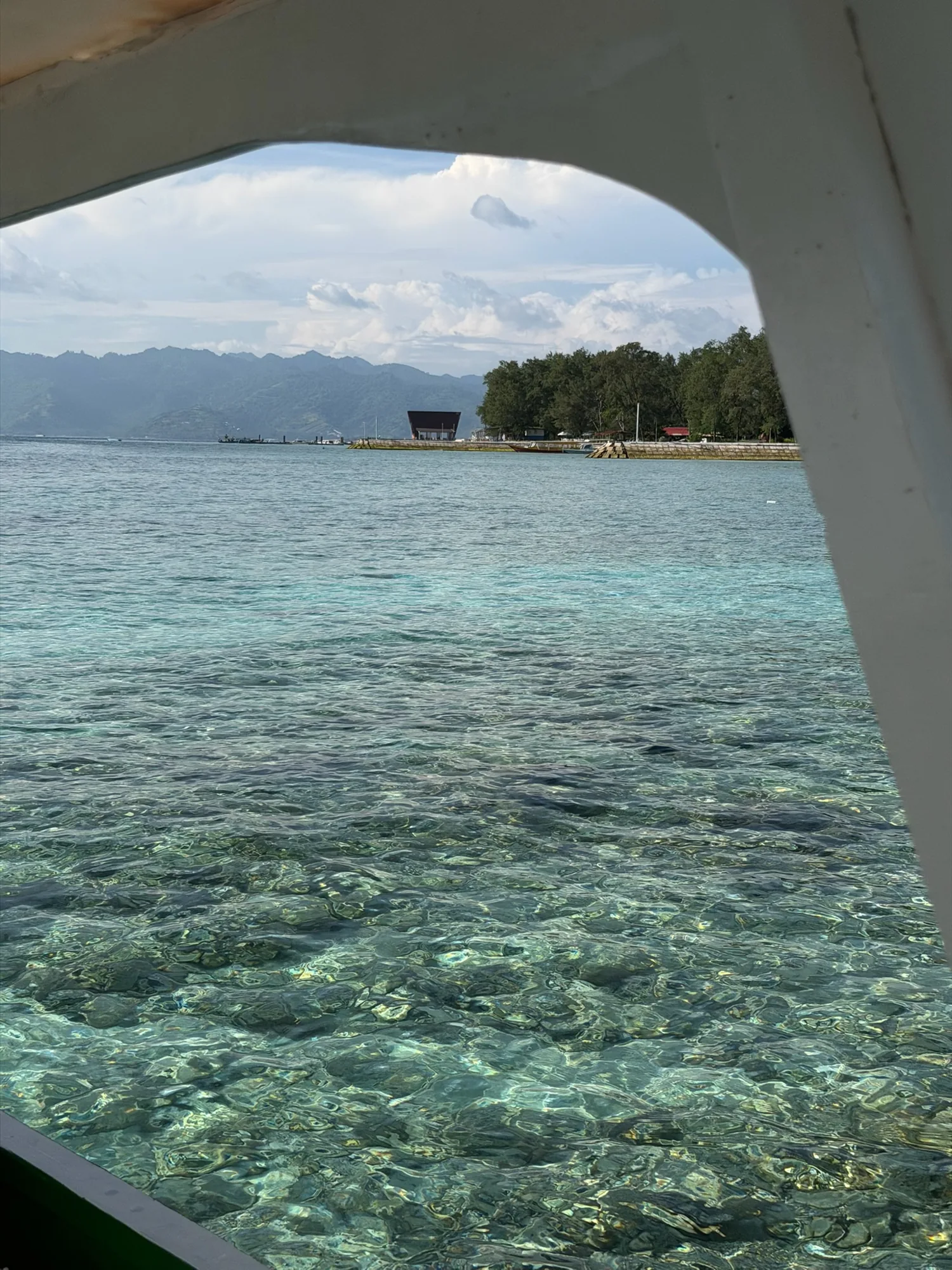
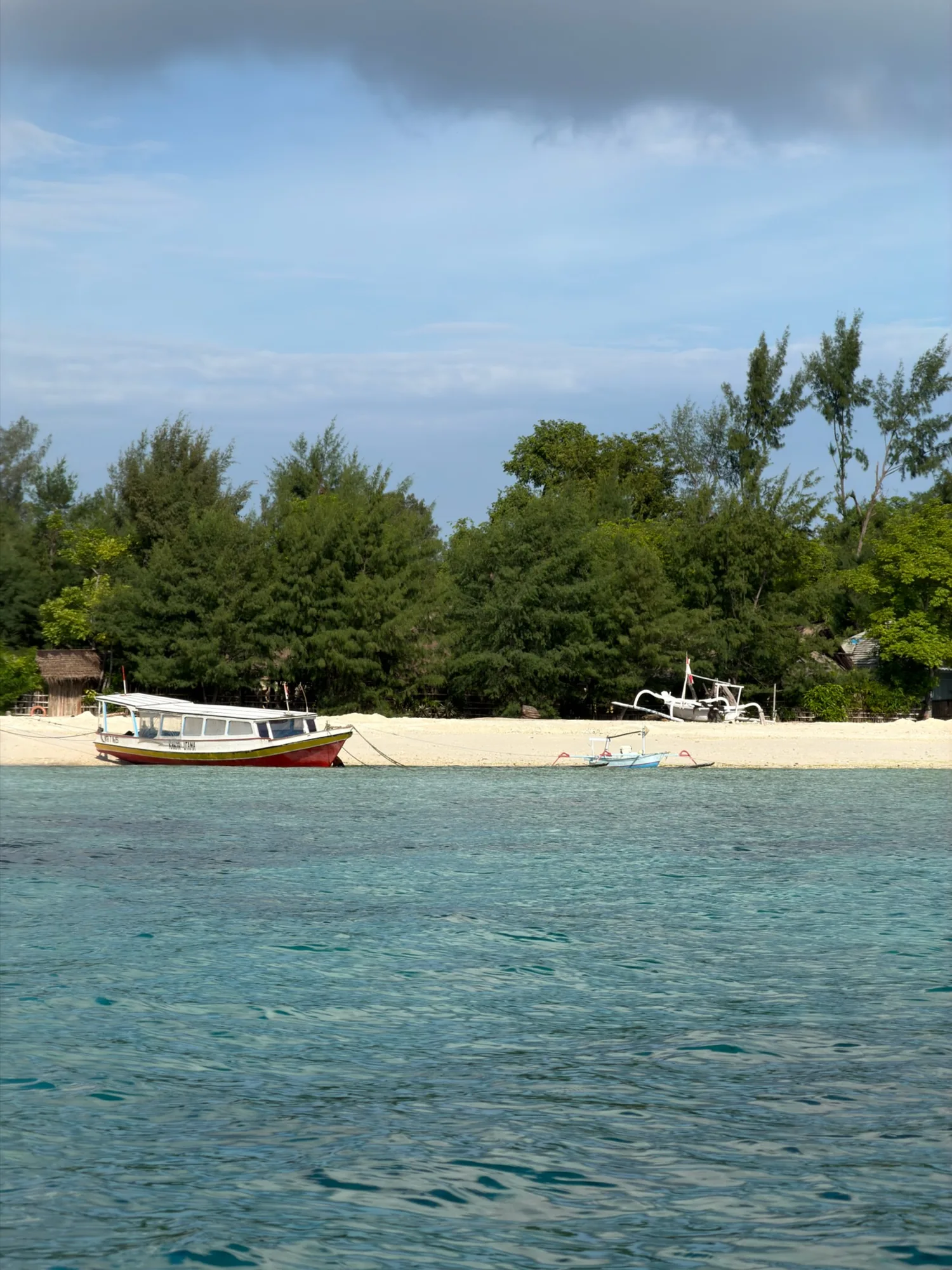
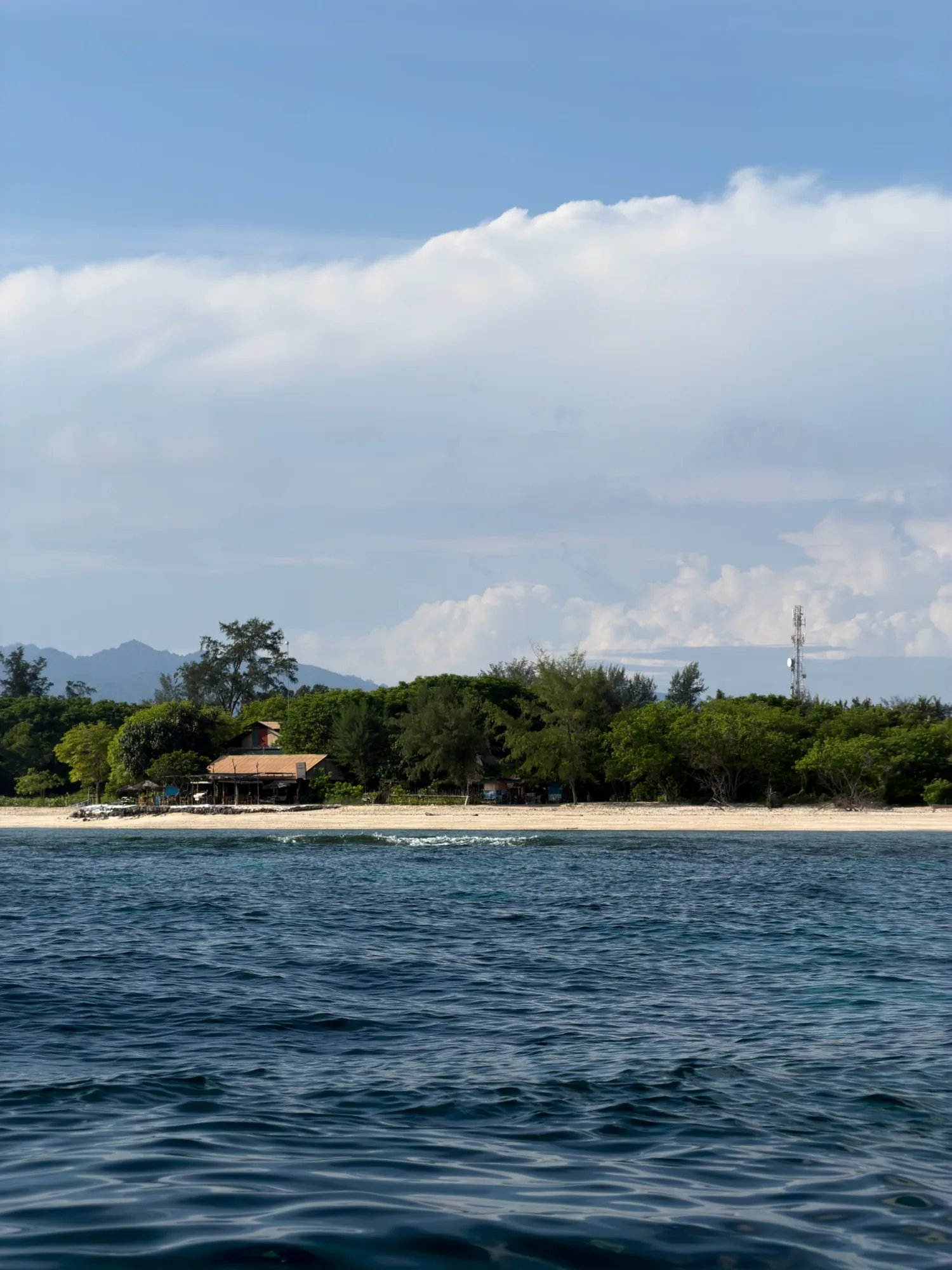
Use the remaining afternoon to observe rather than schedule. The Gili photographs in this journal show boats close to the sand and trees immediately behind the shore. The useful lesson is scale: a modest walk can contain several different views, without needing a formal tour.
Day two: choose one sea activity
Book snorkelling or diving only after understanding the conditions and the operator’s arrangements. Ask about the group, supervision and the time away from shore. Give the activity the morning or afternoon it needs, then leave recovery time before dinner. Salt water and sun are enough to make a full day feel full.
If you prefer staying on land, replace the excursion with a bicycle ride or a longer walk in cooler hours. Stop before the route becomes tiring. The plan works because it has one main activity, not because that activity has to take place offshore.
Day three: repeat something you liked
A return to the same beach gives you a chance to notice light, tide and small details missed the first time. It also removes the pressure to research a new destination for the final day. Keep the departure requirements visible, including checkout and the walk back to the boat.
A second island can fit if transport is clear and you have a confirmed way back. Do not treat a short crossing as proof that the whole outing will be short. Waiting, boarding and arranging the return take time too. Choose the excursion only when it adds something you want from the trip.
Keep a replacement for poor sea conditions
If an outing changes, the day can still hold a village walk, photographs from shore and a longer meal under cover. Bring something to read and a dry bag for the phone. A weather interruption is easier when the schedule has no chain of bookings depending on the first activity.
Indonesia’s tourism board describes the three islands as having different levels of activity, with Meno quieter and Trawangan more social. Choose your base before using this plan: a slow itinerary on a lively island will still feel different from the same timetable on a quieter one.
Leave with time to spare
On departure morning, pack anything damp separately and keep documents where you can reach them. Confirm the meeting point with the operator, as it may differ from the place where you arrived. Allow for the time needed to carry the bag and ask for help if the route is awkward.
The most useful souvenir from a short stay is knowing what to repeat next time. Note one beach, one manageable walking route and one thing you would give more time. That is a better basis for another trip than a list of places you hurried past.
Sources & visitor information
Destination information checked on 4 October 2026. Use the linked venue or authority for current access and booking details.
← More from the journal