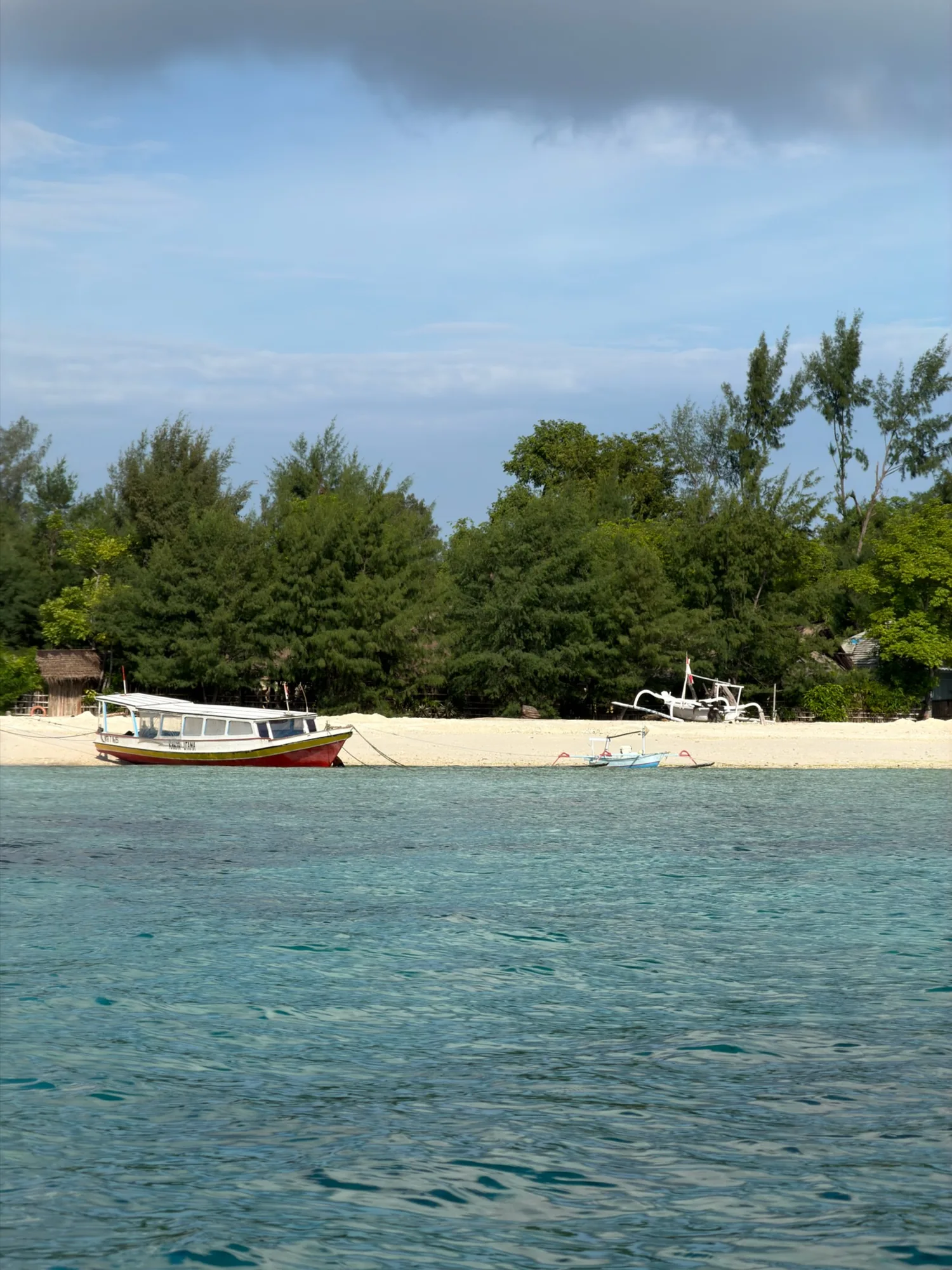
The Gilis without a scooter: walking, cycling and packing
Small islands still reward a thoughtful bag and a manageable route.

An island trip becomes simpler when the bag and the daily route agree with each other. On the Gilis, plan around walking and bicycles rather than assuming a scooter will carry everything. A few small choices before arrival save repeated journeys across the island when it is hot or you are carrying wet swimming things.
Start with the walk from the boat
Indonesia’s tourism board describes walking, bicycles and horse-drawn cidomo as the islands’ ways of getting around. Choose a bag you can lift and move for the last part of the journey. A large case may be manageable at the harbour but awkward on a sandy section or narrow path.
Ask your accommodation for the walking route from the arrival point, including any uneven stretches. Save the directions offline. A location that looks close in a straight line may have a less direct path, and the difference matters most on the day you have luggage.
Make a small daily bag
Carry drinking water, sun protection and a dry layer or cover-up in a bag that closes. Give your phone a separate protective pouch. Wet swimwear should have its own compartment so that you can stop for lunch without soaking the rest of your things.
A light bag also makes spontaneous changes easier. You can pause for a photograph or decide to walk back along a different path without reorganising everything. Keep valuables close to you when stopping at the beach; a cycling basket is convenient for towels but should not become unattended storage.
Try the bicycle before the long loop
Check the brakes, tyres and seat height when collecting a bicycle. Ride a short section before setting off around the coast. If the path becomes sandy or busy, get off and push. Finishing a loop is less important than staying comfortable with the surface and other people using it.
Keep your first ride short and note where the accommodation sits relative to the coast. Take a photograph of a useful turn or landmark. It is easier to learn the route in daylight than to recognise it after dinner, especially when similar small paths branch inland.
Put shade into the timetable
Do longer walks early or later in the day and reserve the middle for a sheltered meal or rest. The itinerary does not need to be empty, but it should not require walking back and forth for forgotten equipment. Combine errands with the outward journey and carry enough water for the planned walk.
If you intend to be out after dark, take a small torch and know how you will return. A phone light is a backup, yet using it constantly also consumes the battery you need for directions and contacting the accommodation.
Reduce what needs washing and charging
Pack clothes that dry quickly and can be worn in more than one setting. Two practical swimwear options allow one to dry while you use the other. Leave room for a damp bag on departure rather than filling the luggage to its limit at home.
Bring the charging leads you use and a compact power bank if your phone handles maps and photographs. For drinking water, ask where a safe refill is available. Gili Eco lists refill initiatives across the islands, making a reusable bottle a useful piece of everyday equipment rather than another item to carry unused.
Sources & visitor information
Destination information checked on 4 October 2026. Use the linked venue or authority for current access and booking details.
← More from the journal