Lisbon tram photographs without chasing the tram
A street photography approach that keeps the route small, the camera ready and the working transport moving.
A Lisbon tram photograph is easier to make when you choose a street scene first and let the tram enter it. Following the vehicle from corner to corner leaves little time to compose and can put you in an awkward position. Build a short walk around the rails, the buildings and one safe place to wait.
Choose a setting before a vehicle
Look for a stretch of street with a clear line, a readable background and somewhere to stand out of traffic. A hill can lead the eye through the picture; a façade can give the tram colour to sit against. Avoid a position where a useful angle depends on stepping into the roadway.
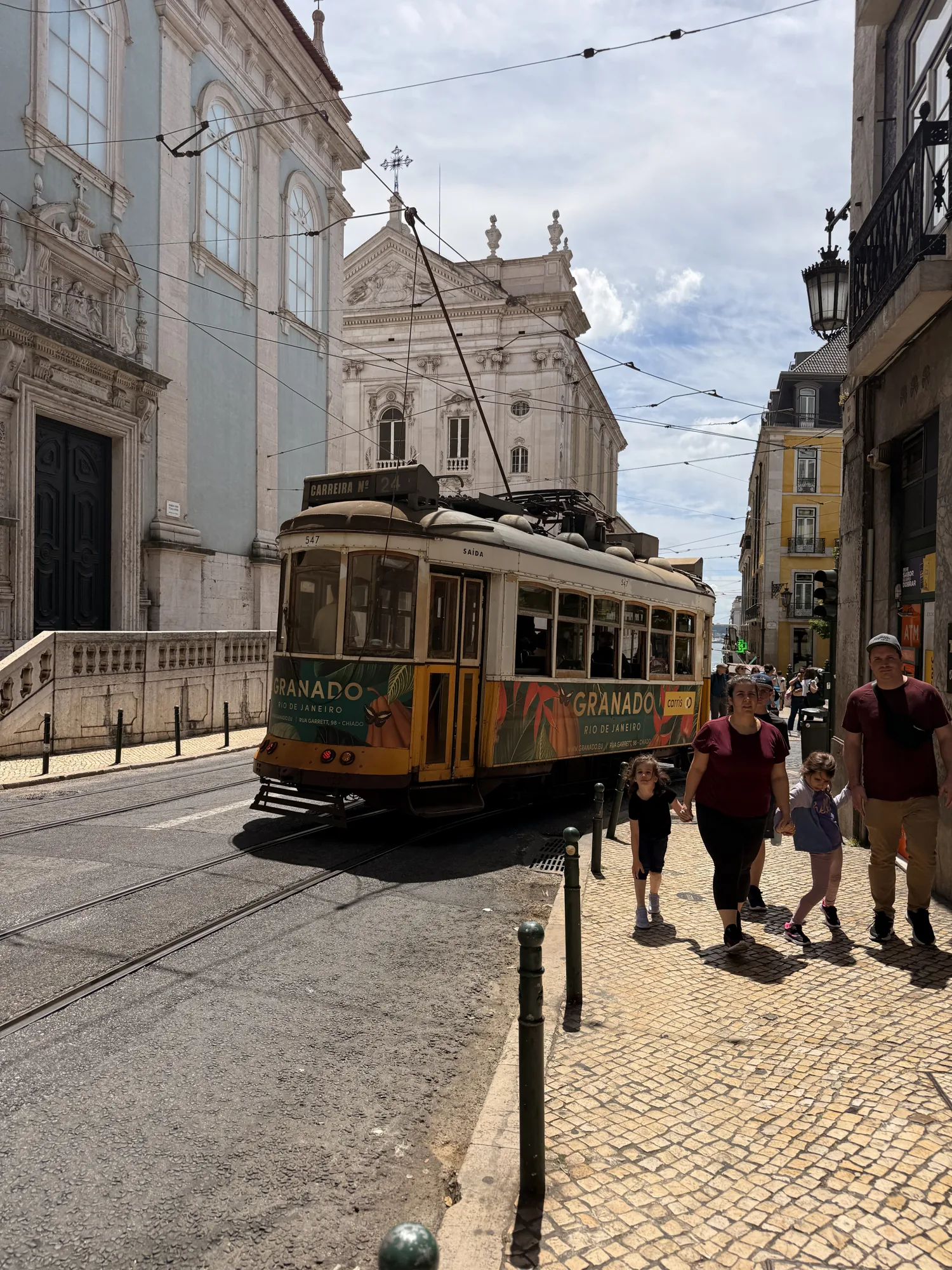
The photograph here shows a tram as part of the Lisbon street. Notice how much of the frame belongs to the buildings and paving. The vehicle gives the scene movement, but the street makes it recognisable.
Keep the walk compact
Choose one small area and walk it before settling on a position. The route information for Lisbon’s no. 12 tram describes a circuit through the eastern historic neighbourhoods, including the viewpoints and cathedral area. Use current operator information if you also intend to ride; a photo walk does not need to depend on a particular departure.
A small route gives you time to watch how the light falls. You may find that a side street without a tram makes the stronger image. Keep that possibility open rather than rejecting everything outside the original idea.
Wait without blocking anyone
Once you have chosen a place, make space for pedestrians and keep entrances clear. Residents, deliveries and transport still need to use the street. Hold the camera ready at a comfortable height and wait for the vehicle to approach your composition.
Take a short sequence, then lower the camera. Review it away from the crossing or narrow pavement. If the picture did not work, decide what needs changing before repeating: perhaps the tram was too small, a sign competed with it or the brightest part of the frame pulled the eye away.
Photograph the quiet intervals too
The rails, overhead wires and slopes remain when the tram has passed. Make one picture that describes those lines without the vehicle. A detail of paving beside a rail can add texture to a set dominated by street views.
In bright light, look for shade that still holds detail. Avoid forcing the sky to a deep blue if that treatment distorts the building colours. A restrained edit leaves the paving and paint closer to the scene you stopped to look at.
Ride only when you want the journey
If you choose to board, treat it as public transport. Check the fare and route, allow people to leave first and keep equipment close. A busy vehicle is not a private photo session, so put the camera away when making space matters more.
For the finished series, keep one tram frame, one wider street scene and a detail you noticed while waiting. That combination records both the movement and the place. You can end the walk with a small set you understand, without spending the afternoon trying to overtake the same vehicle.
Sources & visitor information
Destination information checked on 4 October 2026. Use the linked venue or authority for current access and booking details.
← More from the journal