Lisbon viewpoints: choose two and enjoy the walk
How to plan a small viewpoint outing around Santa Luzia and Portas do Sol without spending the day chasing terraces.
A Lisbon viewpoint day can become a tiring succession of climbs. Choose two neighbouring terraces and give the streets between them some attention. Santa Luzia and Portas do Sol make a useful eastern pairing, with different ways to frame the roofs and enough flexibility to continue into Alfama afterwards.
Plan the climb before the photograph
Decide how you will reach the upper streets and how you will leave them. Walking up from the centre may suit an energetic morning; a transport-assisted start may be more comfortable after a long travel day. Check the exact stop and the remaining walk before relying on a service to remove the climb entirely.
Carry water in a small bag and keep a layer available if you expect to linger into the evening. A viewpoint visit includes a fair amount of standing still, and the breeze can change how comfortable that feels.
Use Santa Luzia for the foreground
Santa Luzia offers more than the distant panorama. Visit Lisboa identifies decorative tile panels, a garden and a water feature among its details. Look at how a foreground edge changes the view beyond it. A roof panorama framed by part of the terrace can be more specific than an image containing only buildings.
Spend a minute looking before lifting the camera. Choose what the frame is about, then remove distracting objects by moving yourself. This is usually more effective than taking twenty versions from the same spot.
Change the view at Portas do Sol
Move to Portas do Sol for a second composition rather than another copy of the first. Compare the shapes of the roofs and the visible stretch of river. The official Lisbon fado route includes both viewpoints, so they can anchor a short neighbourhood outing instead of a city-wide chase.
If one terrace is crowded, spend longer at the other. The practical value of a viewpoint is the chance to look comfortably, and that sometimes outweighs a small difference in the famous angle.
Walk between the pictures
The connecting streets help the photographs feel like part of a place. Look for the slope of the paving or a building catching light at the end of a lane. Avoid stepping into the road while framing a tram: choose a safe position first, then wait for the scene to come to you.
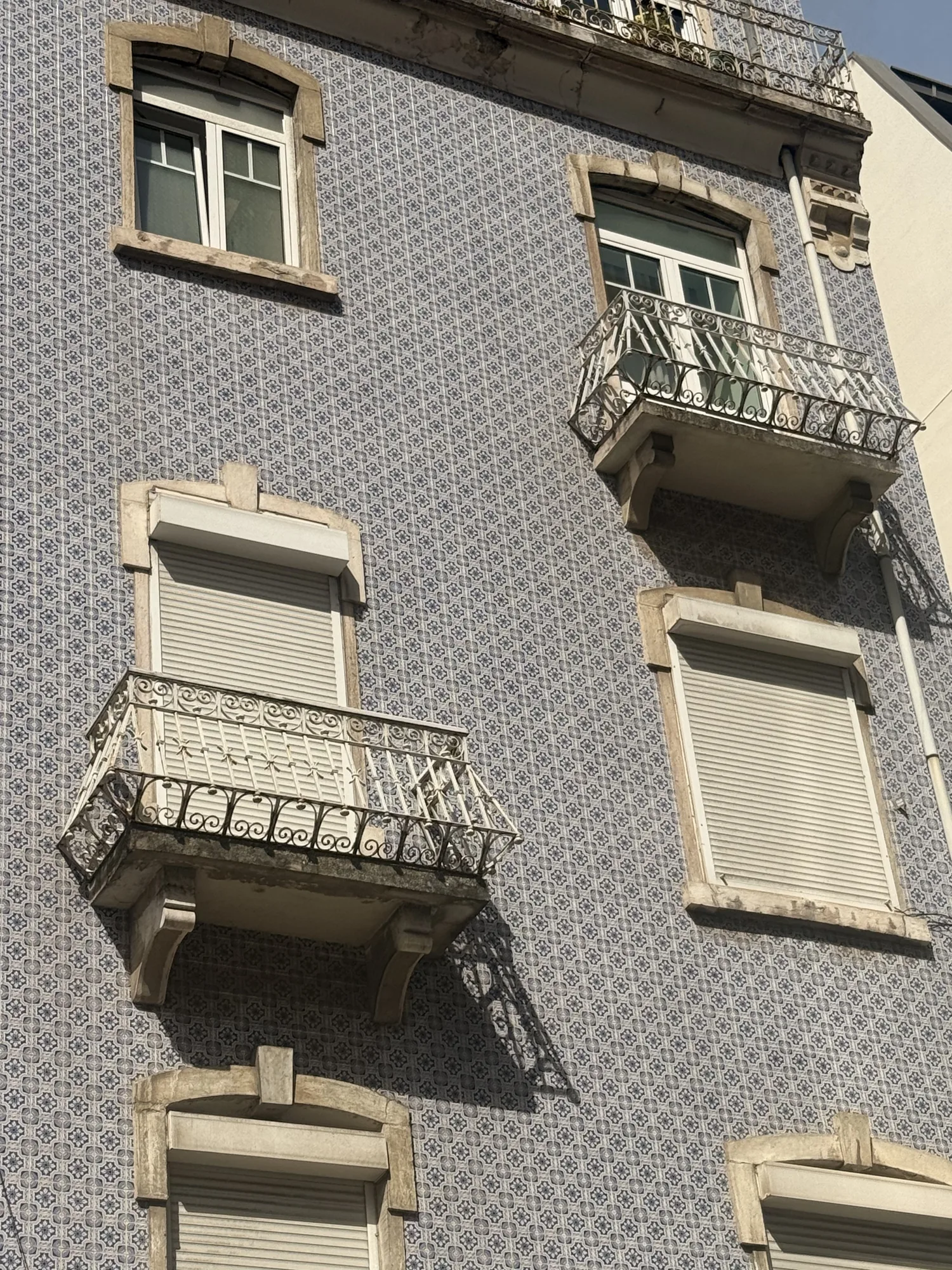
The photograph accompanying this guide shows a tiled Lisbon façade from the city archive. It adds a street-level detail to a walk centred on the higher terraces. At the viewpoints, pay attention to the roofs and the changing size of the river in the frame. The best composition for your visit will depend on light and where you can stand without blocking others.
Choose your next stop by energy
After the terraces, descend through Alfama if you still want a walk. If your legs have had enough, take a proper break and find a convenient return connection. You do not need a third viewpoint to make the outing complete.
For evening photography, confirm the route home while there is still daylight. Take a few final frames and put the camera away for the walk down. A small set with two distinct views and one street detail tells a clearer story than a long collection of similar panoramas taken as you hurry between hills.
Sources & visitor information
Destination information checked on 4 October 2026. Use the linked venue or authority for current access and booking details.
← More from the journal